Wheat Harvest
June 22, 2025 | Arkansas City, KS
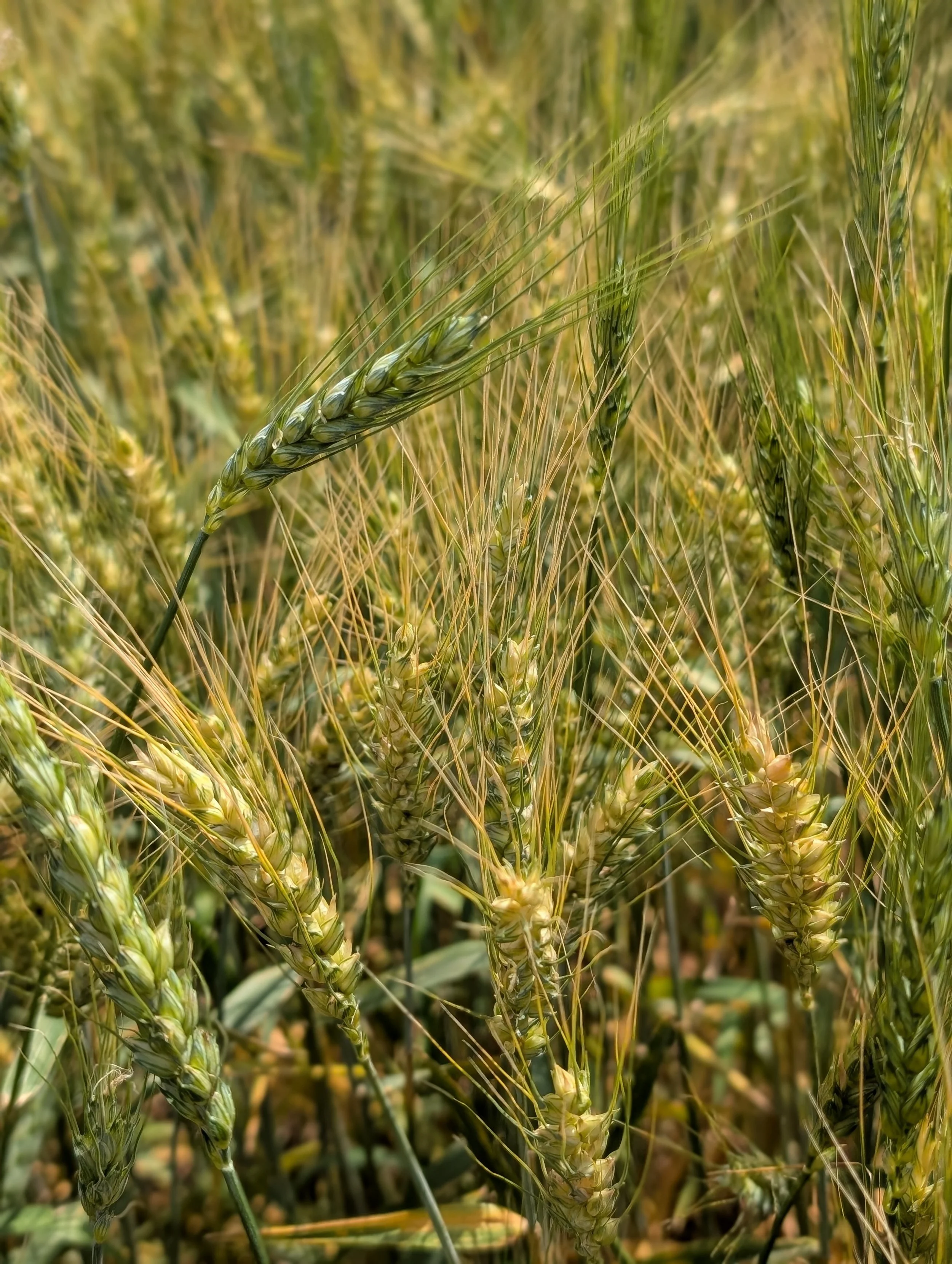
It’s been a tough week for the farmers in Cowley County, KS. Winter Wheat, which is planted in fall, is usually harvested in early June. With good temps and good rain this spring, this year’s crop was looking really good. Unfortunately, thunderstorms hit right as the wheat looked ready to cut. A devastating storm on June 17, brought softball size hail to the area causing damage to homes, cars, and crops. Local news and community facebook pages advised “if you see a farmer this week, buy them a cup of coffee” - the storms wiped out a year’s worth of work for some of these guys. Yes, there is crop insurance, but it's not the same compensation as a good yield year and there’s no compensation for the heartbreak.
Wanting to understand what goes into harvest and how these farmers stay motivated, I packed my bags to drive from Chicago, IL to my family’s farm in Arkansas City, KS. This land has been owned and operated by the women in my family for over 100 years. My great grandmother passed the farm to my grandmother, who passed the farm to my mother. My mom grew up farming the land with her mom and sister, while my grandfather worked in the city. Unlike my mother, I did not grow up on the farm. The farm has been managed by a local farmer for the entirety of my life. I grew up 12 hours away from this land, so its existence was more family lore than reality. However, my interest in responsible farming practices has peaked in the last handful of years (read about my conversation with my mom that started this journey), so I threw my bags in the car and waited.
I waited to get the call that harvest was starting. In Kansas, they are waiting for the exact hour when the soil is dry enough to drive the combine and grain buggy. According to my mom they might start cutting anytime of the day or night, except early morning. I thought she was kidding, because don’t farmers get up early? Well, they might for other reasons, but not for harvest. The morning dew makes the crop too wet, so they don’t hit the fields until the dew burns off. As long as things are running smoothly, they will drive those trucks all night.
My mom called on Friday, with the news they would start harvest tomorrow. I was in Kansas by Saturday afternoon. They started on our first field Saturday evening. Within an hour the combine broke down. The crew was frustrated. This may have been the first equipment failure on our fields, but it was clearly not the first issue of harvest. They called it a night for the crew and hauled the combine back to the garage to fix the issue.
By 11am the next morning the crew was back in the fields. I started my ride along in the combine with Gary (pseudonym), a farmer who has been working my family’s land for more than 40 years. I asked how the harvest is going so far, in the wake of the recent storms. Gary shared that things have been tedious. They typically harvest about 15 acres per hour, but are currently down to about 10 acres per hour, because the wheat is blown over / knocked down from the recent storms. They have to move slower to pick it all up. Typically they run the machines at about 5mph, but they’re currently down to 2.7mph. They also have to run the equipment nearer to the ground, to pick up the heads (the top of the wheat plant, where the grains are), so they are picking up more stalks than normal. This is forcing the equipment to do more cutting and separating than normal, which is causing more break downs, like the issue last night.
At this point in the story you might be realizing just how little you know about the inner workings of this farm equipment - cutting, separating - what does this even mean? Don’t worry, I was in the same boat. Here’s what I learned:
The combine (combine harvester) is an incredibly hardworking piece of machinery. The same combine is used to cut all crops (at least on our farm), but the headers (which includes the cutting blades) are changeable depending on the crop being harvested. Soybeans and wheat use the same header, set at different heights, whereas corn harvesting uses a different header entirely.
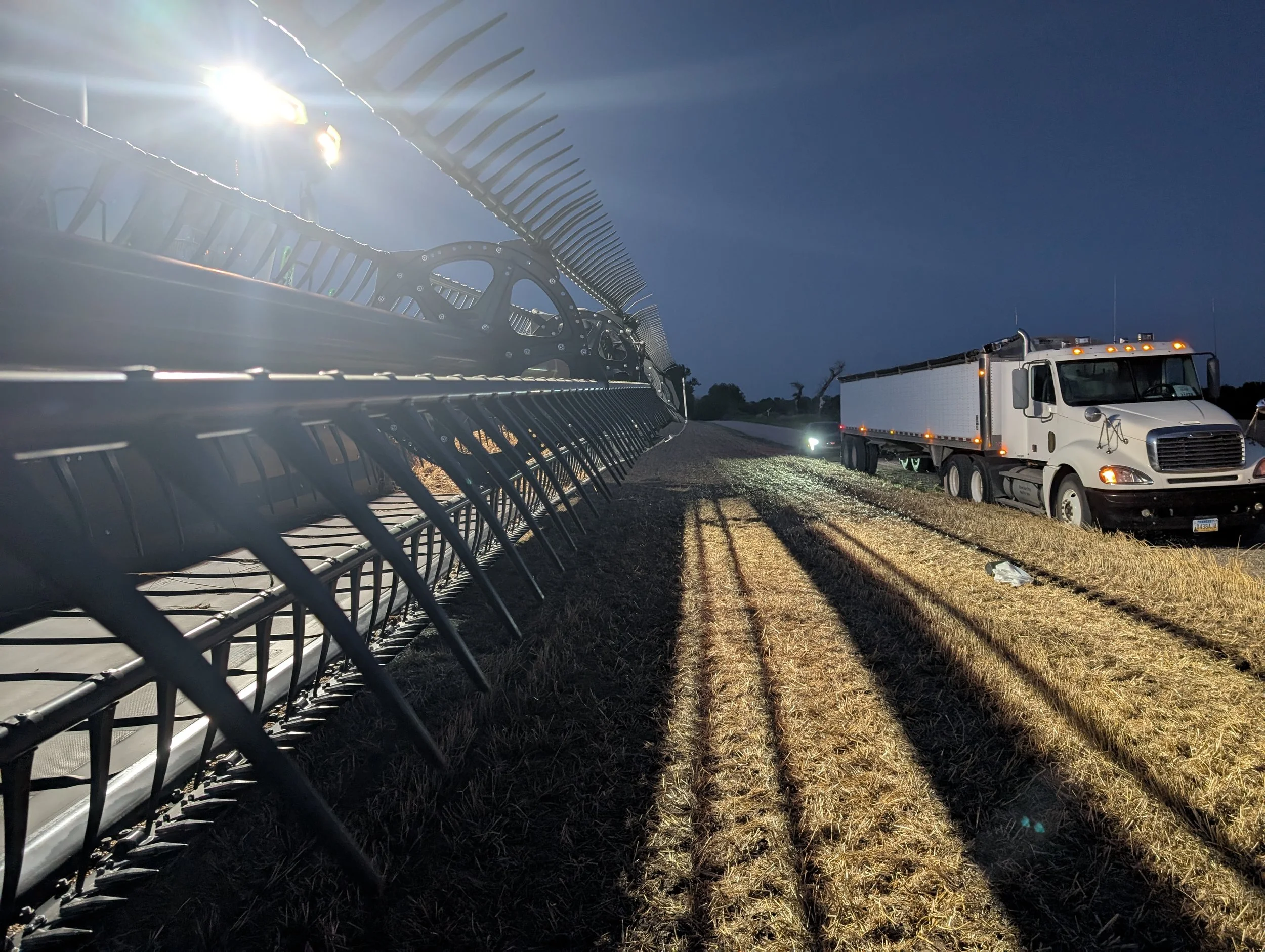
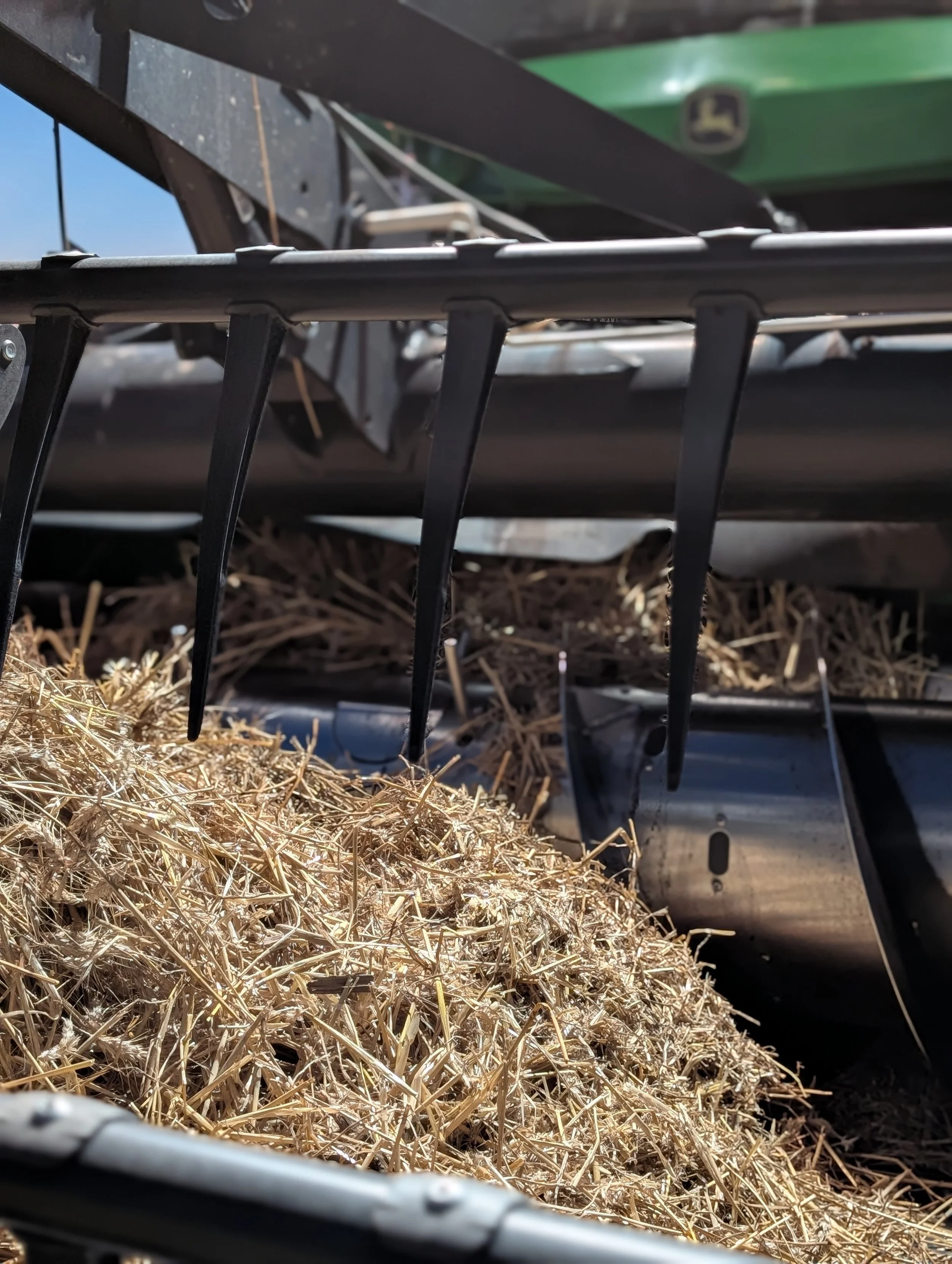
The header attaches to the front of the combine and includes the reel, the cutter, and conveyor belts to move the cut crop into the combine.
As the combine “mows” the field, the teeth on the header reel grab the wheat and pull it into the cutter (blade). The cutter removes the wheat head from the wheat stalk. Conveyor belts move the cut wheat toward an auger at the center of the machine. The auger (which is a corkscrew-like piece of machinery which moves material vertically, horizontally, or both) pulls the cut wheat into the throat, which is the feed channel that connects the header to the combine.
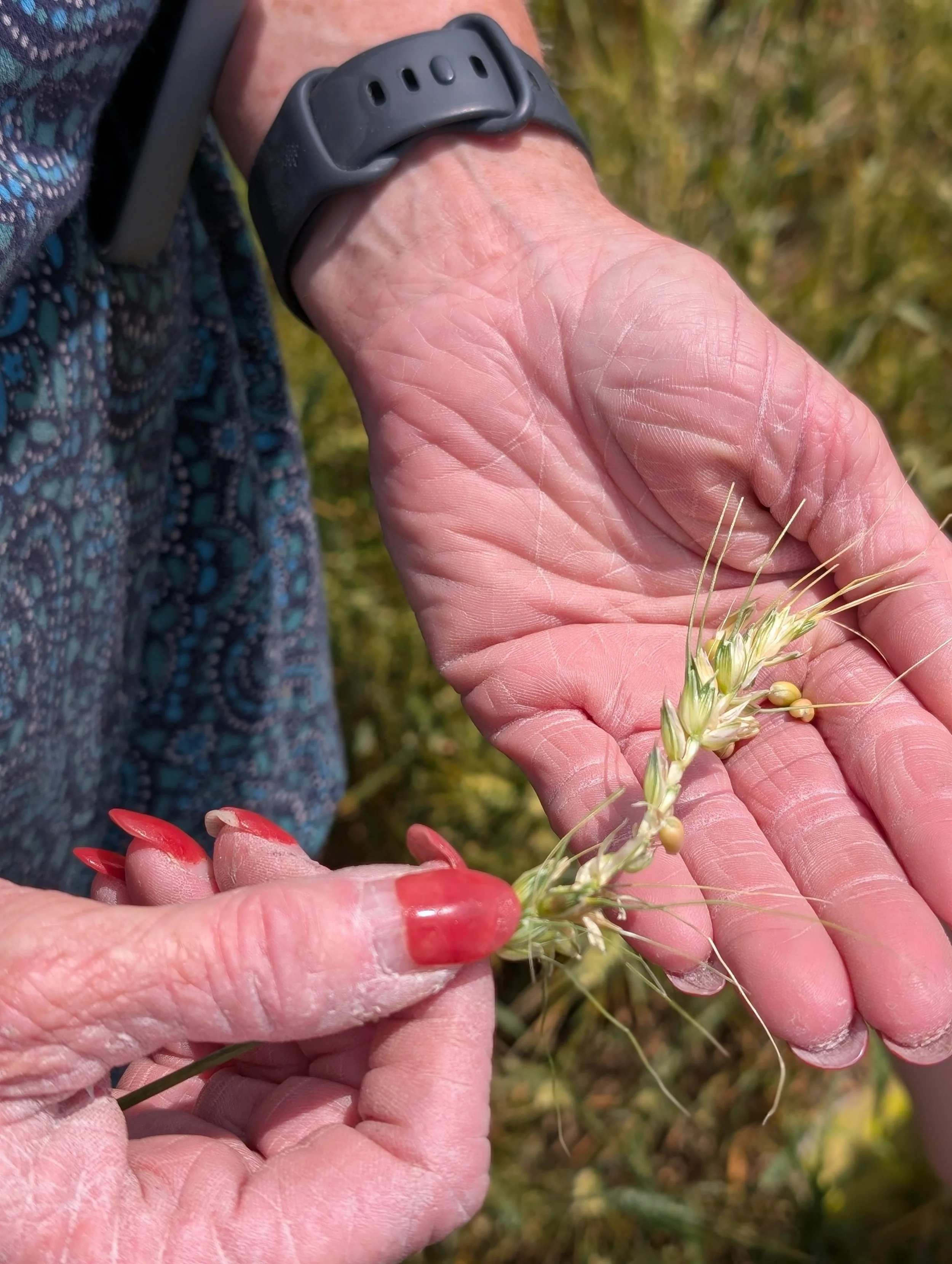
The first operation inside the combine is threshing, where the cut wheat is beaten by a spinning rotor, to separate the grain from the chaff and stalks. The grain falls through sieves into a collecting bin below, while the chaff and stalks are blown out the back of the combine to decompose in the field and nourish the soil.
Air is blown continuously through the collecting bin, to clean the cut and separated grain (also called the berries) as they move via paddles on a conveyor belt to the clean grain bin.
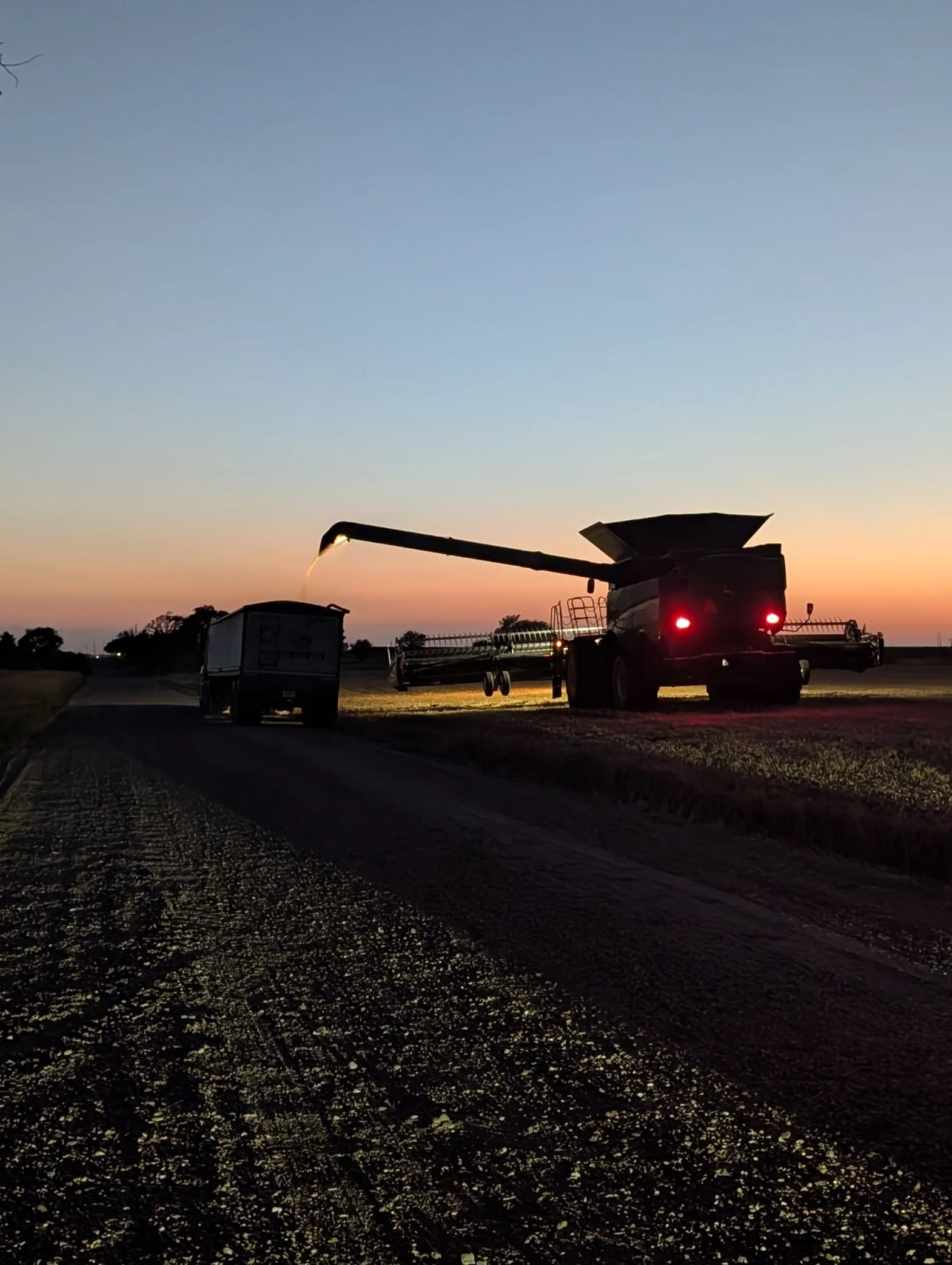
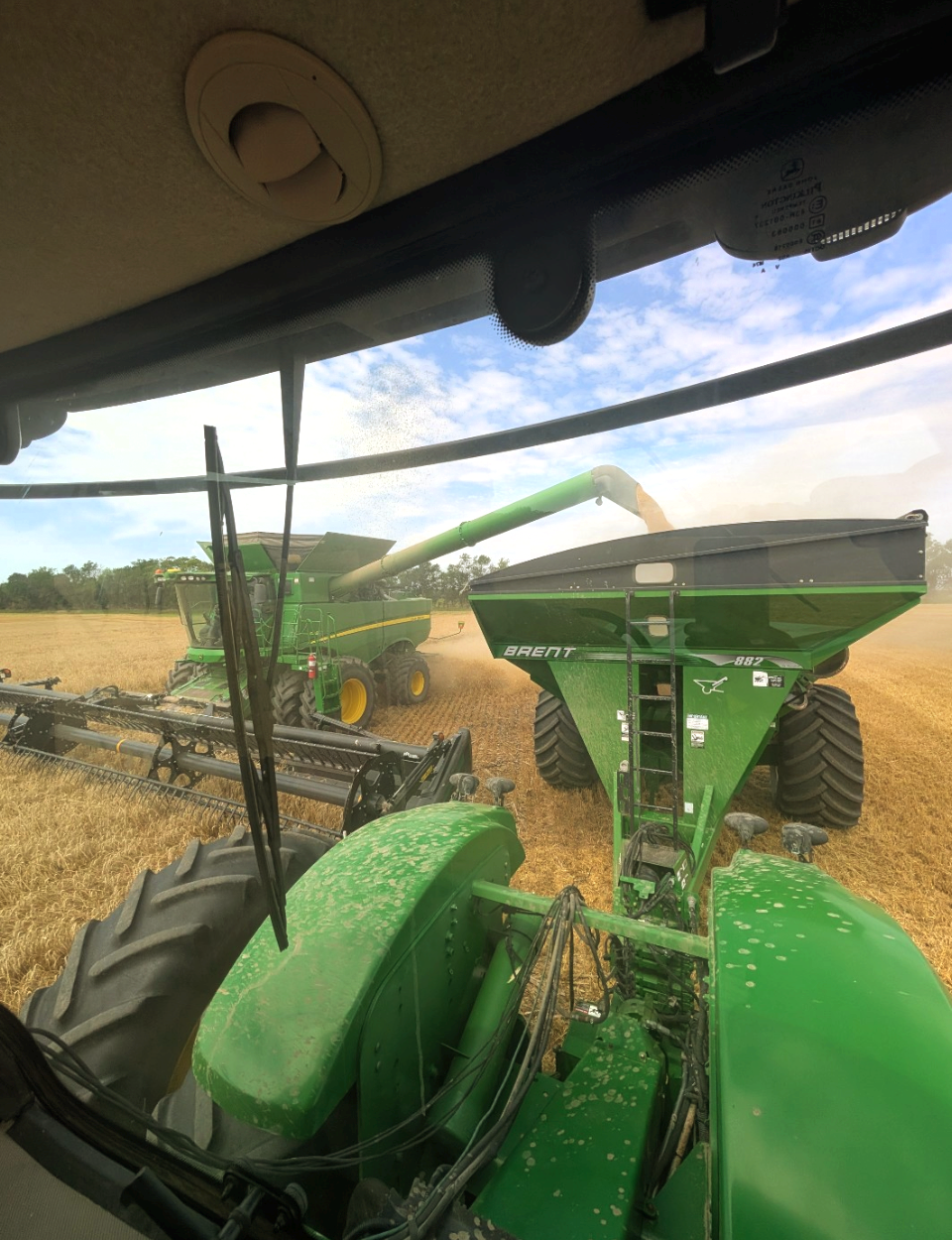
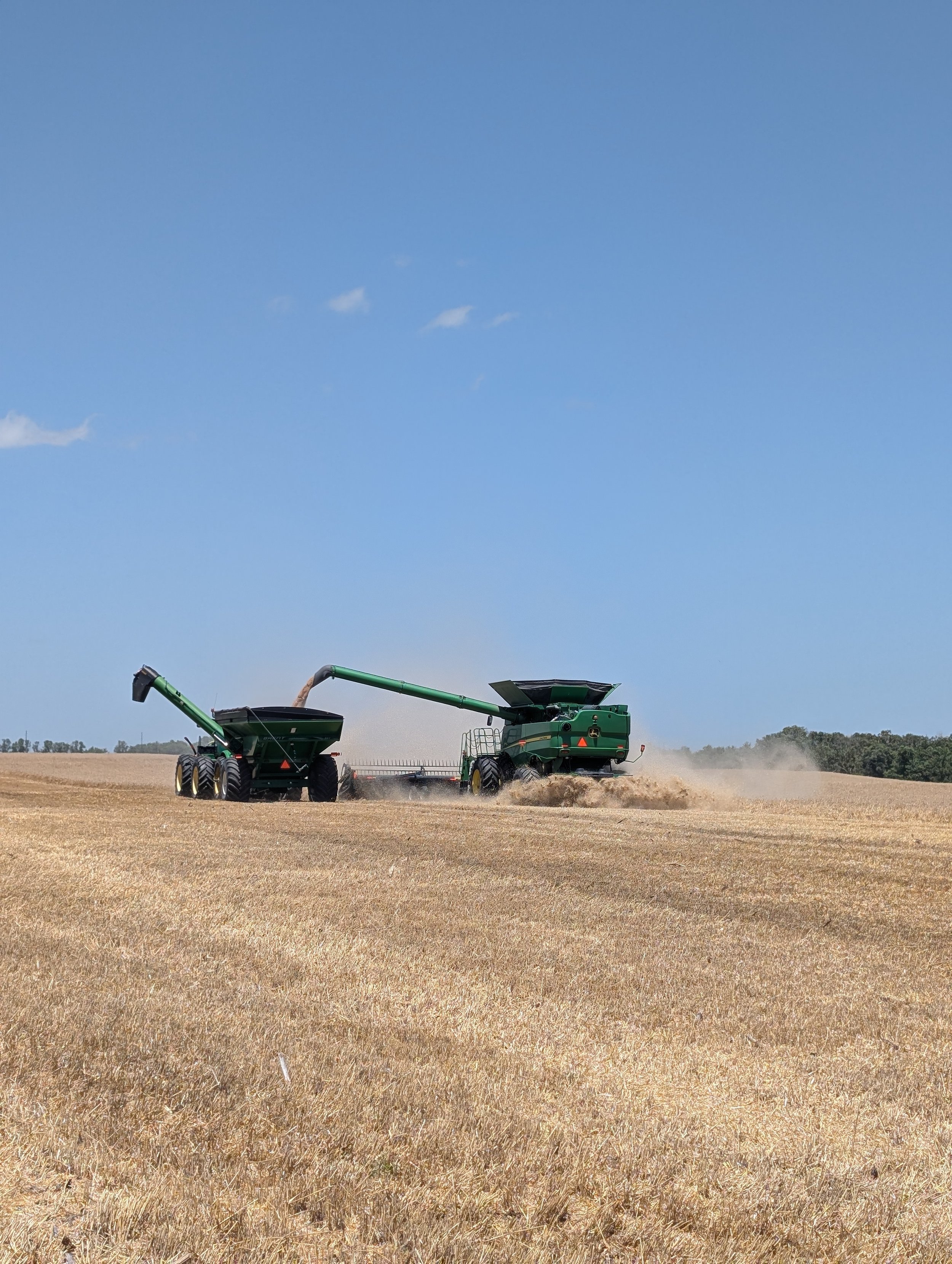
Once the clean grain bin is full, an auger moves the grain from the combine to the grain buggy. The grain buggy is a completely separate piece of equipment, which transports clean grain from the combine to the semi-trucks waiting to take your grain to the elevator. Using a grain buggy means your combine never has to stop cutting, this is critical for efficiency. To empty the combine’s clean grain bin, the grain buggy operator drives parallel to the combine, matching speed and route. The combine auger swings over the grain buggy bin, and transports the wheat from the combine bin to the auger bin. If done properly, the combine is able to continue cutting and threshing as the clean grain bin empties into the grain buggy.
Once the combine’s clean grain bin is empty, the grain buggy drives the grain to the semi-truck(s) waiting on the road. The process to move the grain from the buggy to the truck is the same as from the combine to the buggy, except the vehicles are stationary. Once the grain bin is empty, it returns to the field to get another haul from the combine, while the semi-truck takes the grain to the elevator, so the crew can get paid.
After my ride along with Gary, I joined Oliver (pseudonym) in the tractor hauling the grain buggy. Oliver is a high school sophomore who has joined this crew for a little extra cash this summer. Mostly, he seemed to want to be anywhere other than in this tractor cabin with me - I don’t blame him. Once we started talking about his skeet shooting competitions he opened up a bit. I asked him about the challenges they’ve faced so far this harvest. With half a smile on his face, he said the hardest thing is keeping up with Gary in the combine. This farm equipment is pretty high tech. The combine can be programmed to follow a specific path, at a specific speed, and it will almost self drive. It sounds like Gary, being the seasoned farmer he is, prefers to just drive the combine himself. This means Oliver in the grain buggy has to keep pace and distance accordingly. Still, Oliver agrees it's not a bad gig for the summer. When I’m not here bugging him, he gets to listen to his radio all day.
After my ride along with Oliver, I joined Travis (pseudonym) in the semi-truck to take the grain to the elevator. The drive from our fields to the elevator is only about 12 minutes, so Travis and I didn’t have a lot of time to talk. I did learn that he is a rancher, not necessarily a farmer, but he recently moved to town to be near his fiance. He joined this crew because Nolan (who leads the operation) seems to be a pretty good guy - I would agree. At the elevator, the grain is probed and tested for moisture content, contamination, protein content, etc and weighed. These factors together determine how much this crew will be paid for the haul. Once the grain has been graded and weighed, it is gravity fed from the machine into the elevator collection bins and moved into the grain silos.
My ride with Travis happened to be the last on our fields. I rode with him to another farm about 3 miles west of my family’s land, where the crew was to start harvest next. At the new field I got to catch up with Nolan, who heads this crew. Nolan was having a lunch debrief with the crew before they started harvesting the next field and he headed back to my family’s land to start planting soybeans. It's true, Nolan has been missing from this story so far, but it's not because he’s sitting behind his desk in his home office. Nolan has been following the crew, planting soy beans in the immediate wake of the wheat crop harvest. This is a no till operation, meaning they plant the soybeans directly in the wheat debris, without clearing or preparing the field in between. This practice promotes soil health, which you can read more about here.
I asked Nolan how he’s feeling about this year’s harvest so far. He shared that the crew is about 10% into harvest, so they aren’t feeling the time crunch too bad yet. But if things continue as slowly as they went today, they’ll have to contend with more summer storms and the summer heat burning up the crop. Knowing he needed to move on with his day, I asked one final question, “what is he most excited about for the future of farming?” His answer, “lasers”.
Apparently, there is R&D happening to develop lasers to zap weeds and terminate cover crops, without herbicides or tilling. This could solve the big question of no till vs organic farming, so I’m pretty excited about the idea too.
All the names in this article are pseudonyms to protect everyone’s privacy. But to the crew who let me shadow, thank you so much. Your generosity with your time and your expertise was incredible and I learned so much.
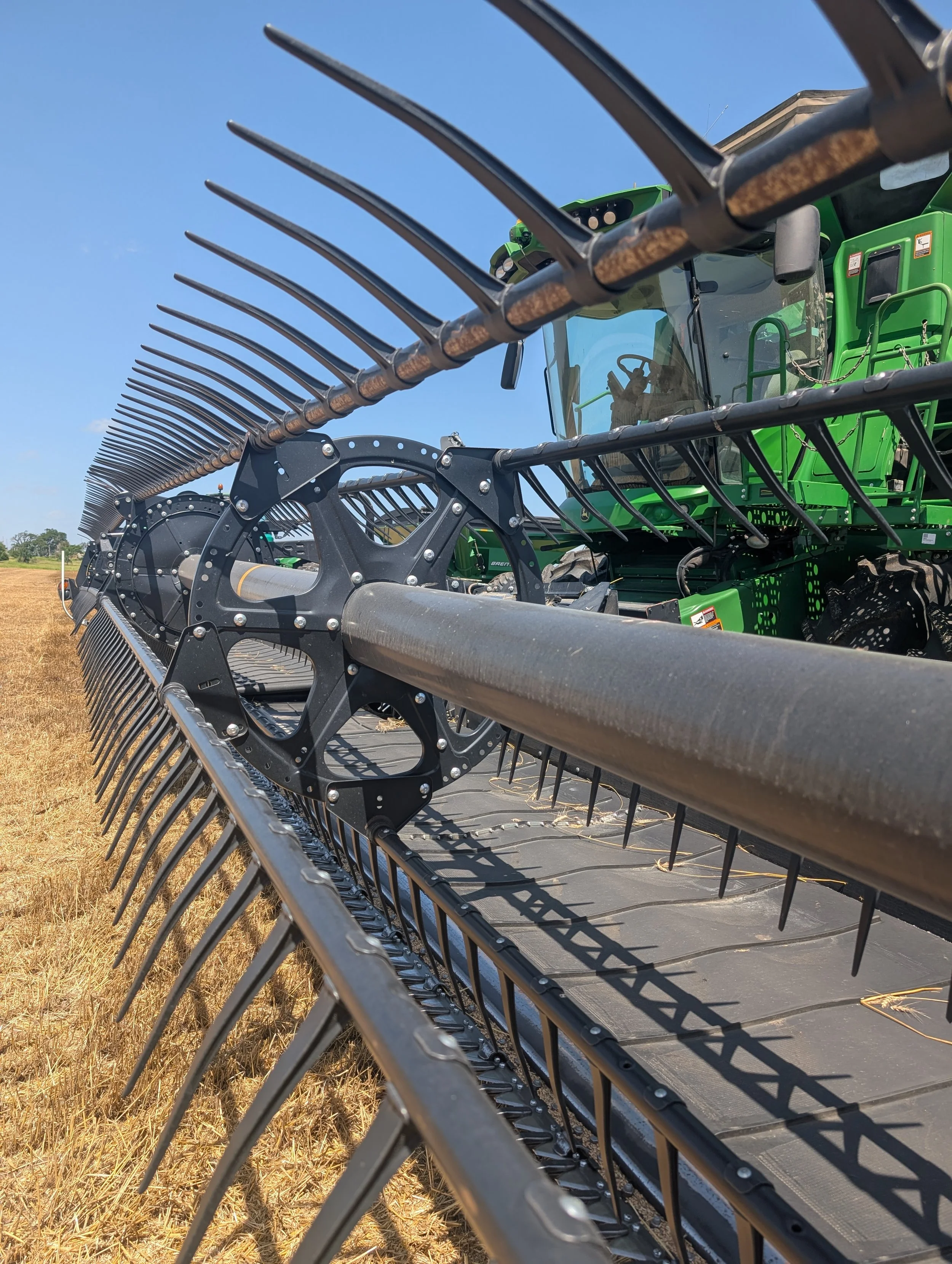
Header Reel
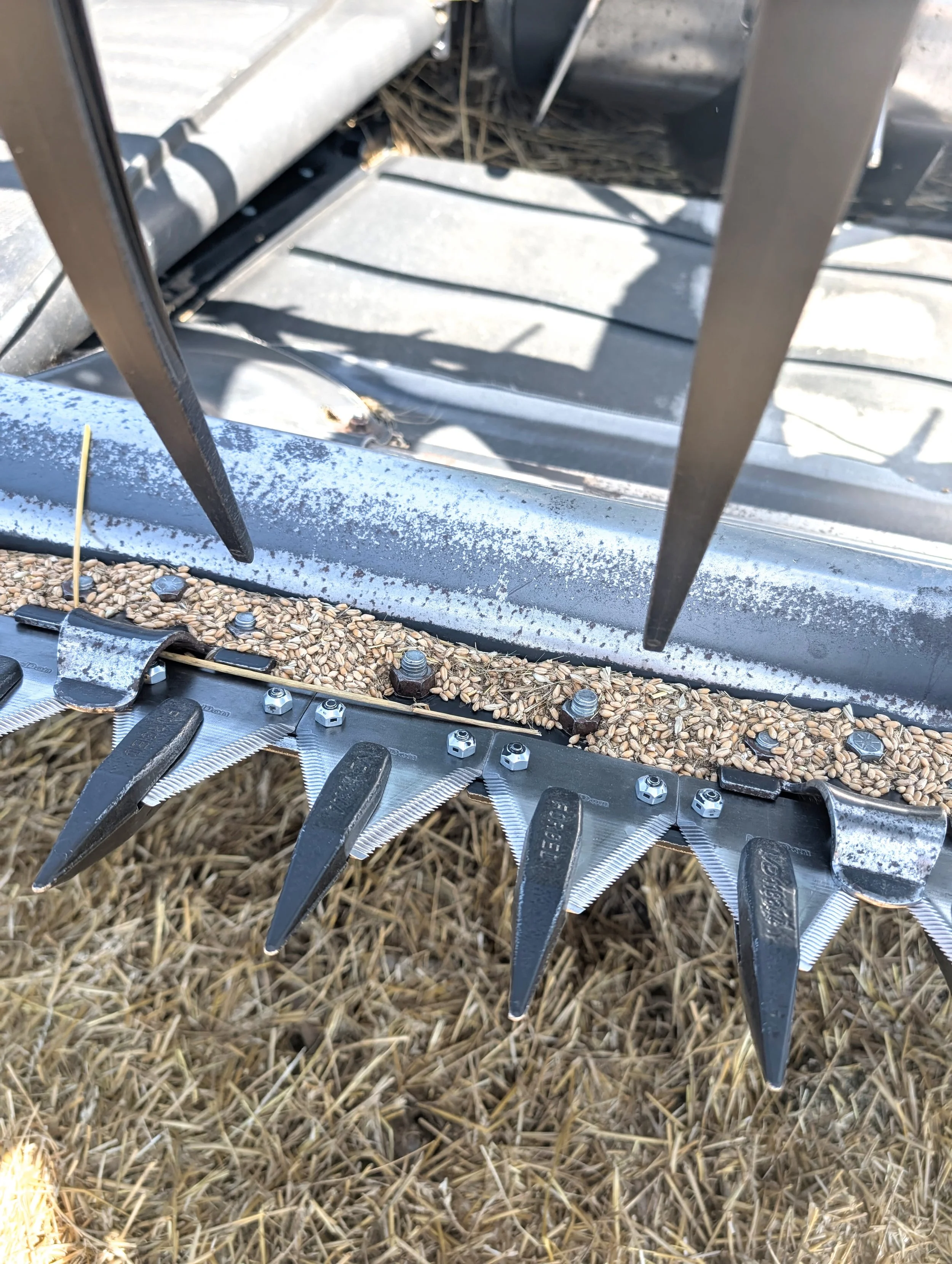
Cutterbar
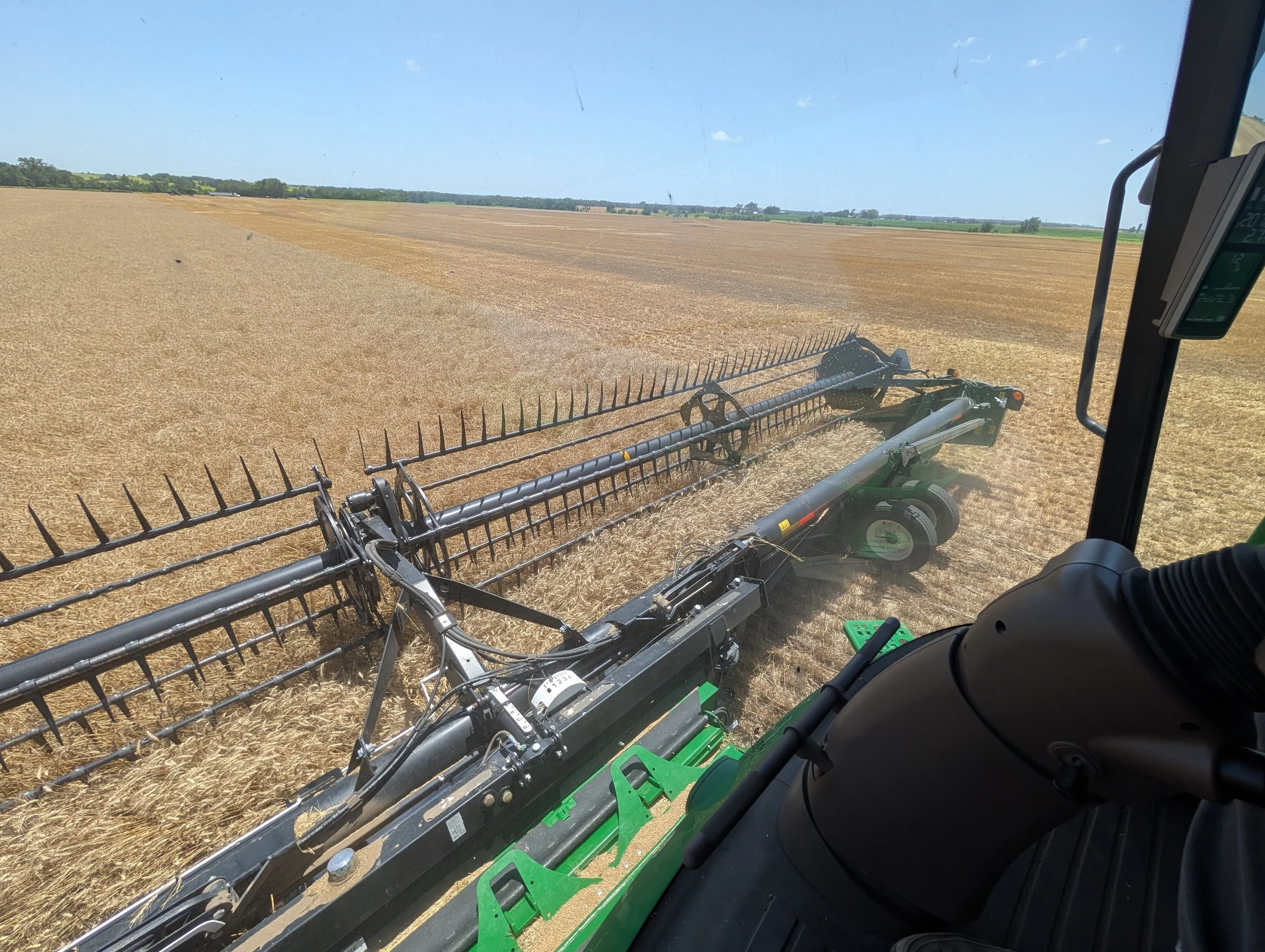
View from the Combine - Cutting Wheat
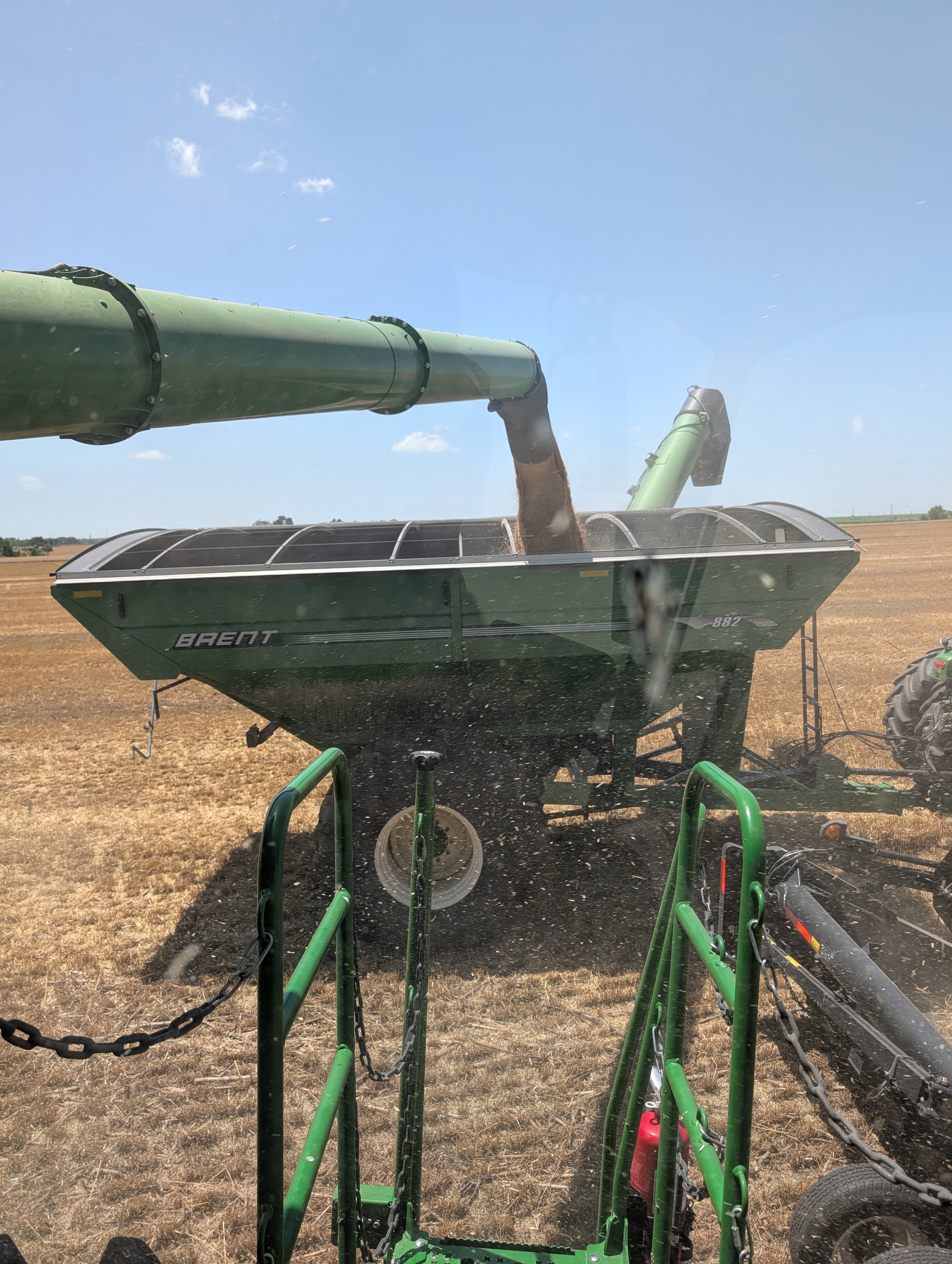
Combine Emptying into Grain Buggy - from Combine
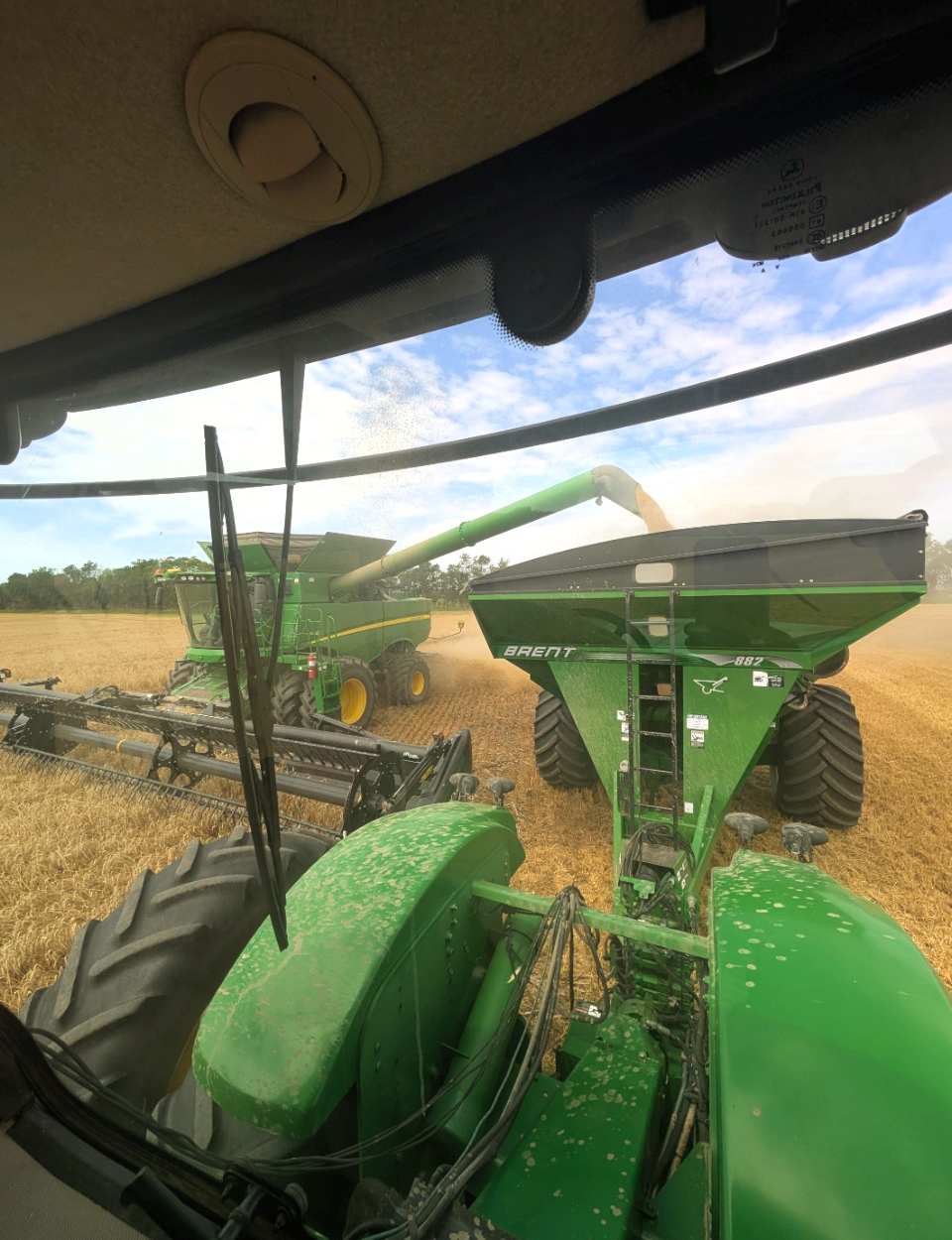
Combine Emptying into Grain Buggy - from Grain Buggy
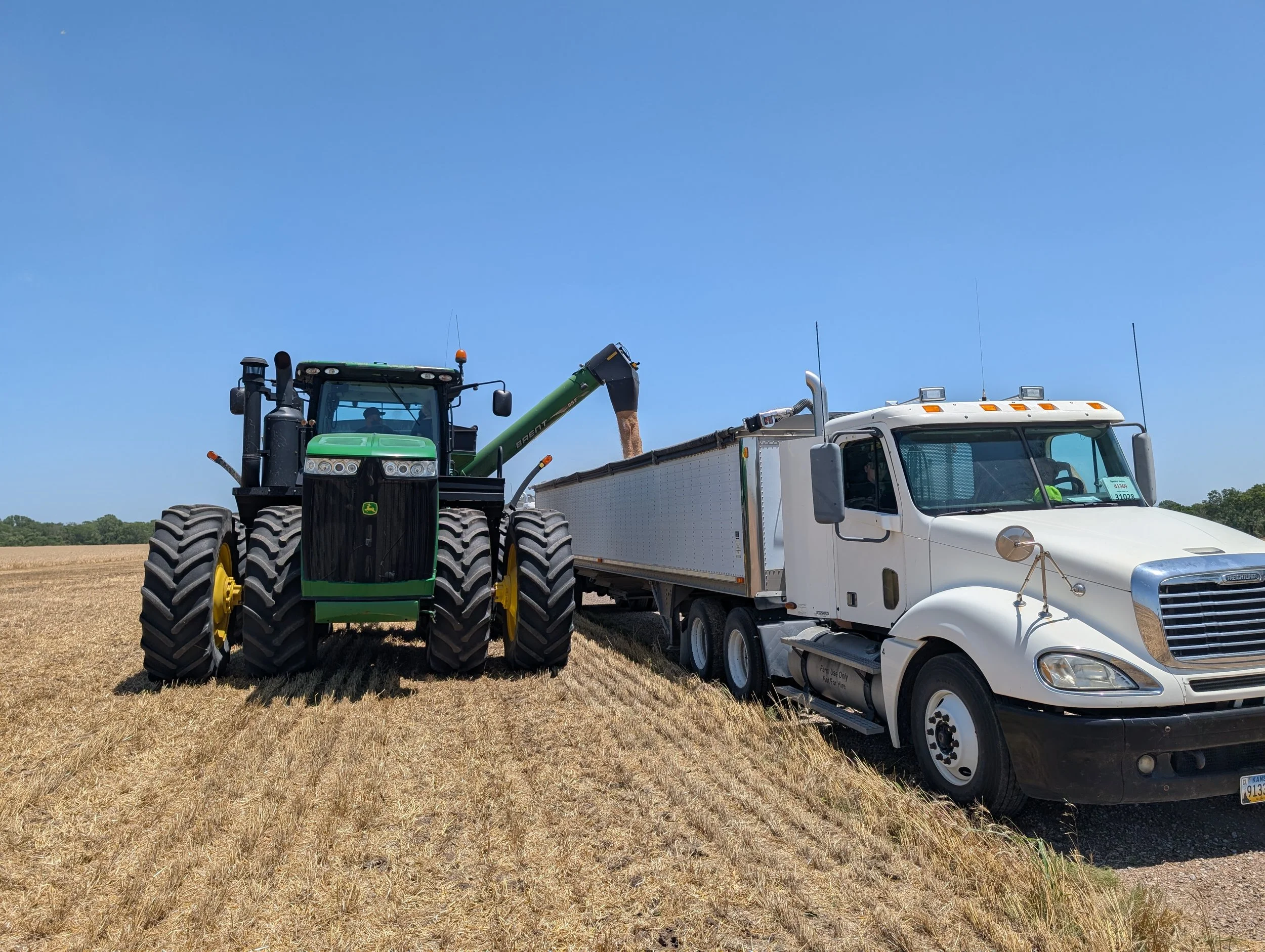
Grain Buggy Emptying into Semi
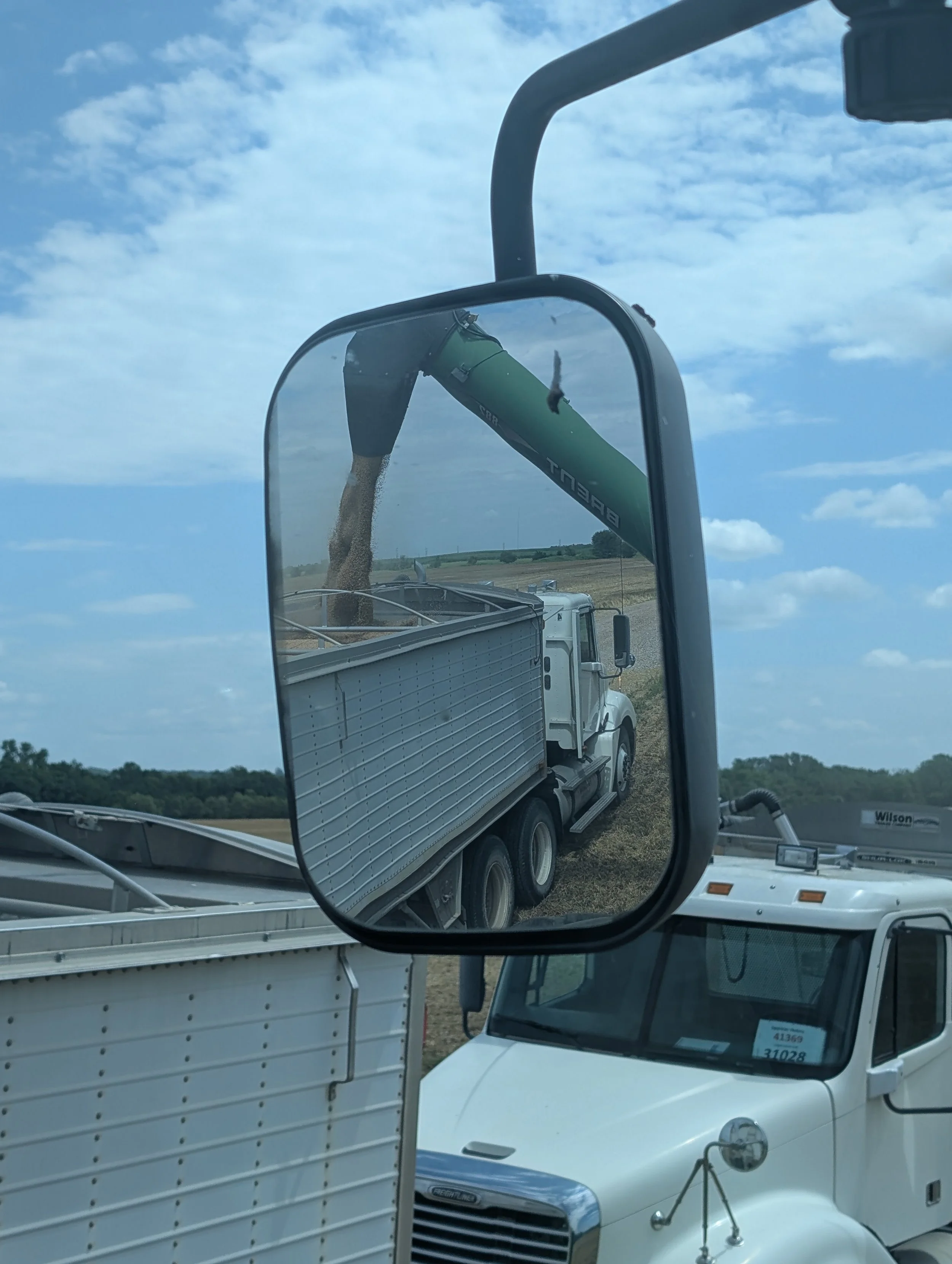
Grain Buggy Emptying into Semi - from Grain Buggy
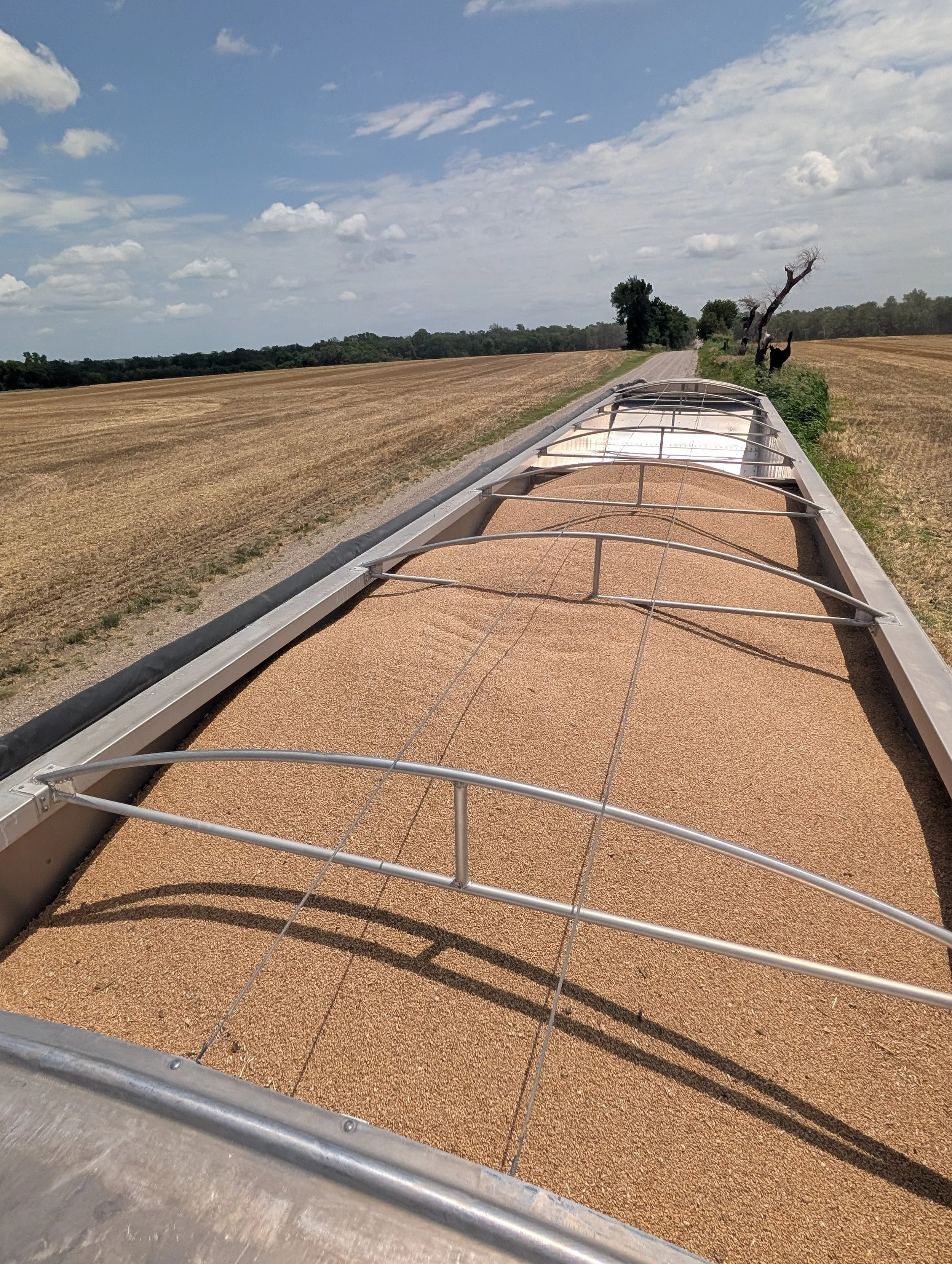
Full Truck - Ready for the Elevator
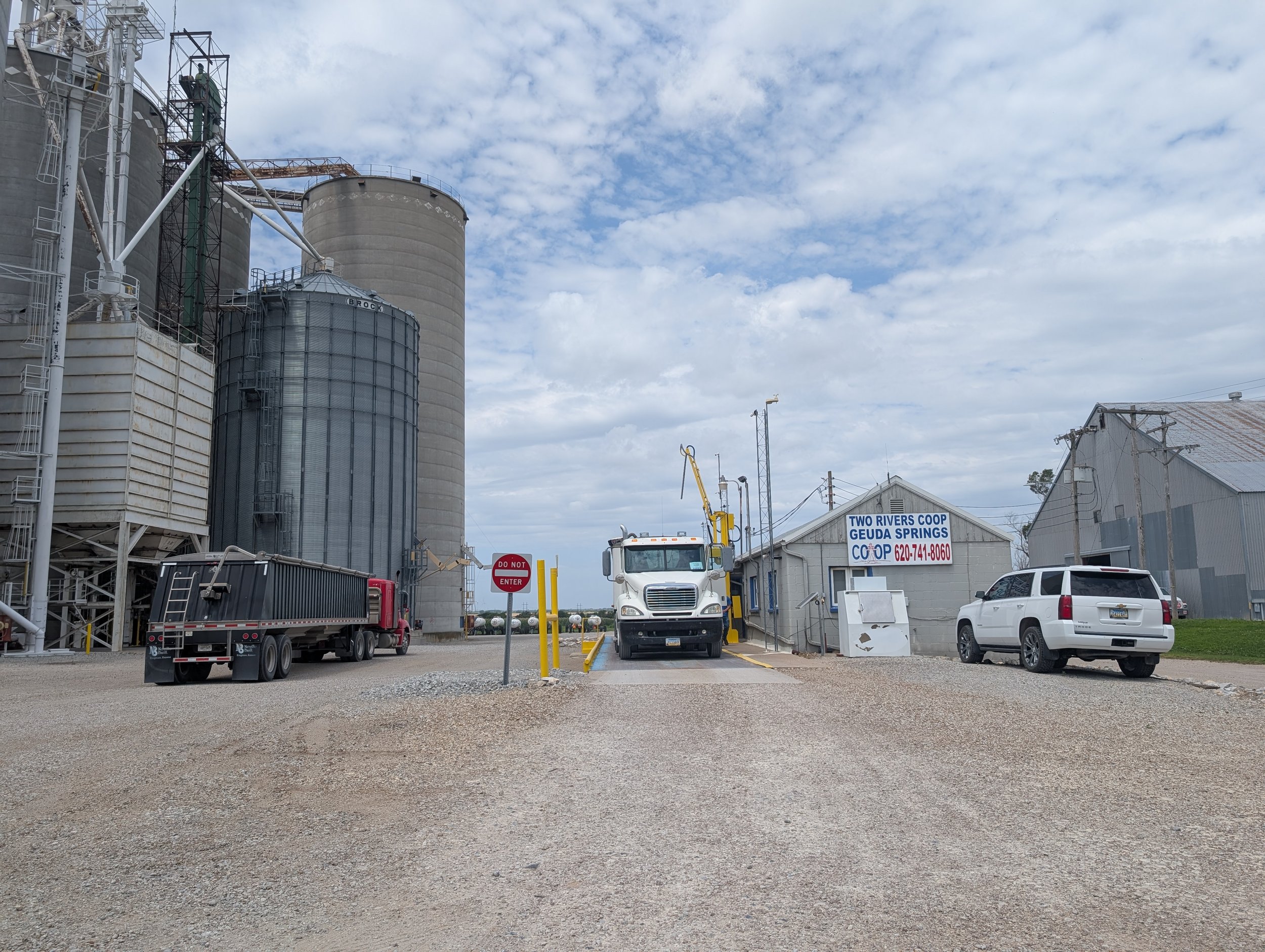
At the Elevator
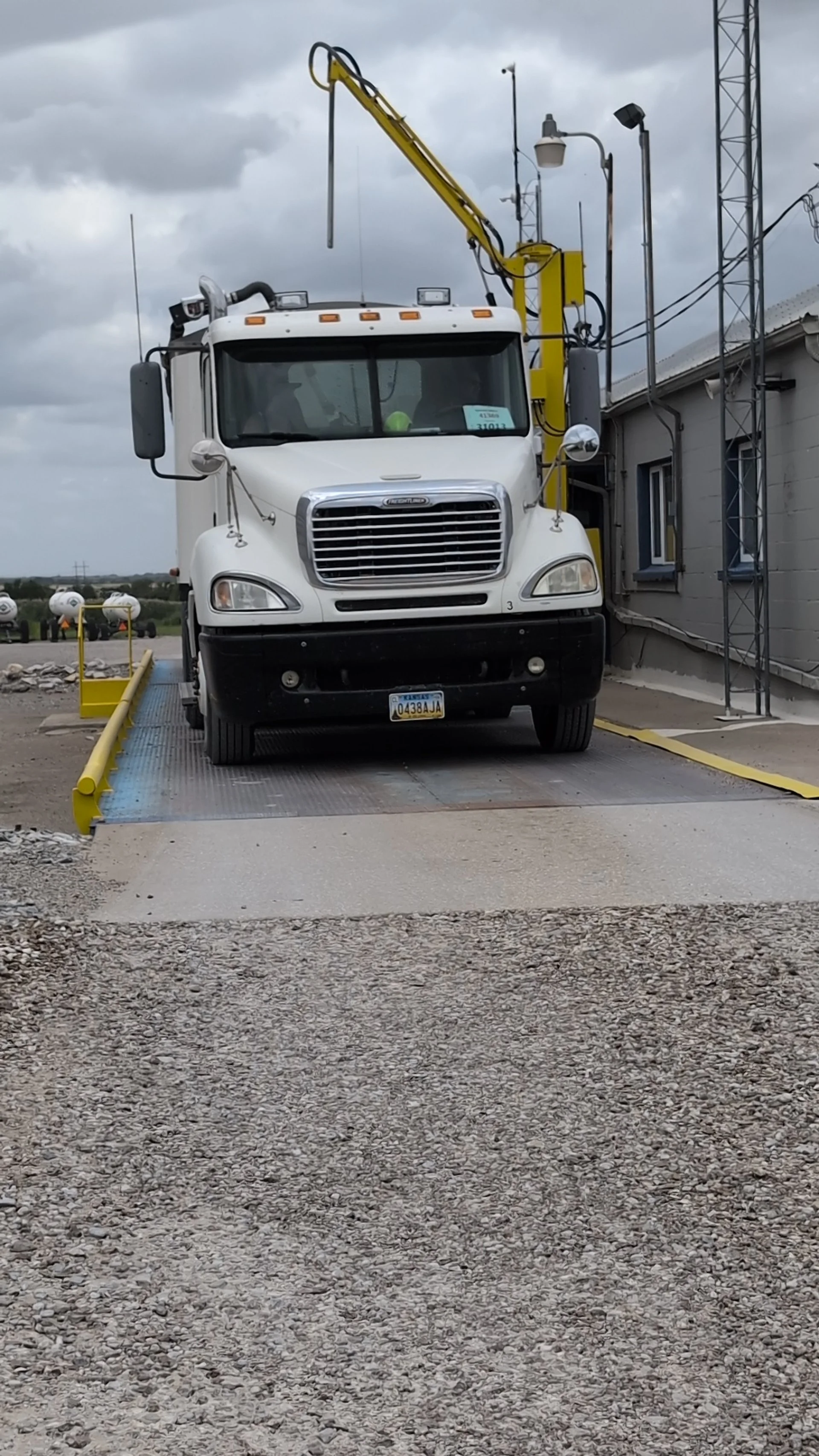
Grain Probe at Elevator Photo Credit: Duana Guinty
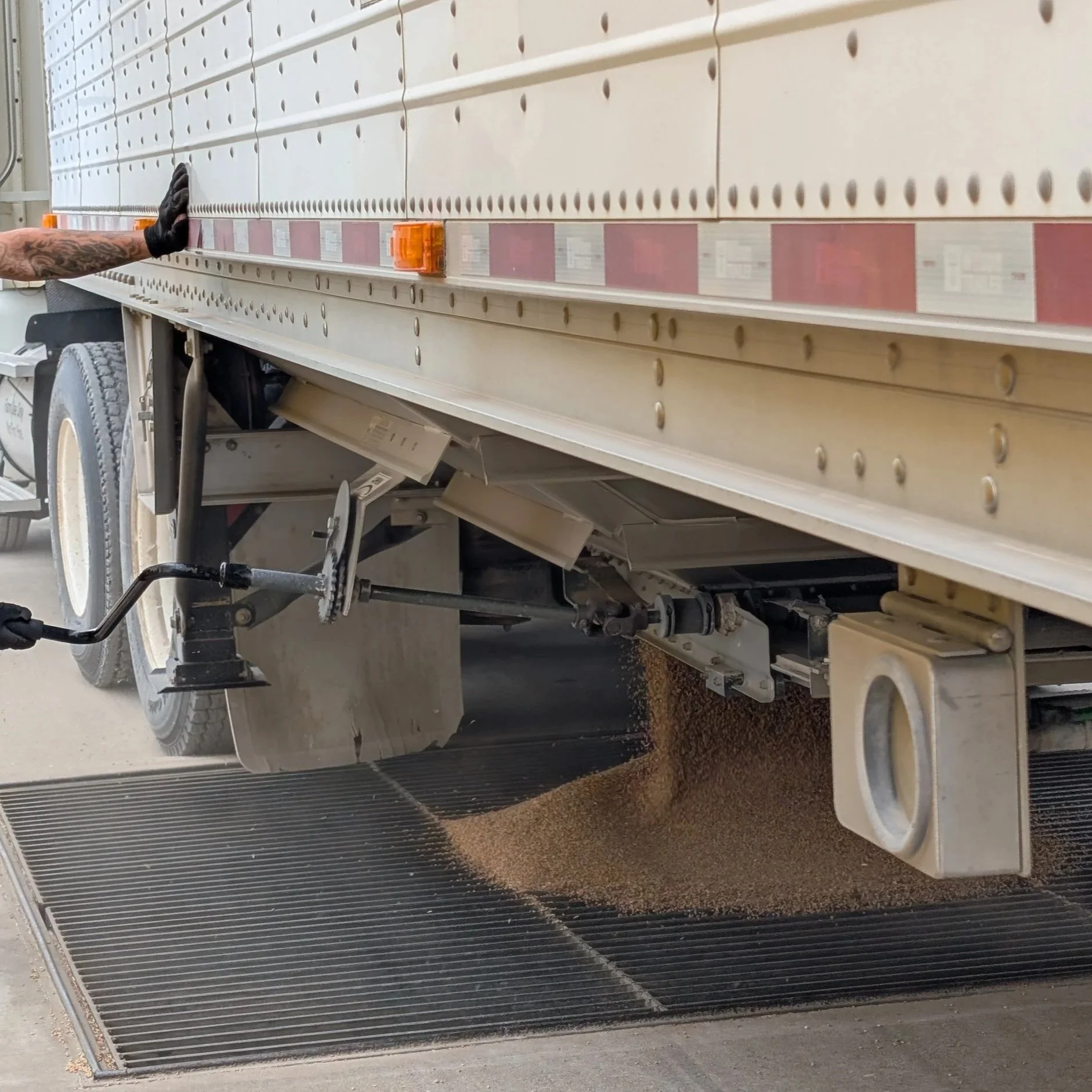
Grain Emptying into Elevator Silo Photo Credit: Duana Guinty
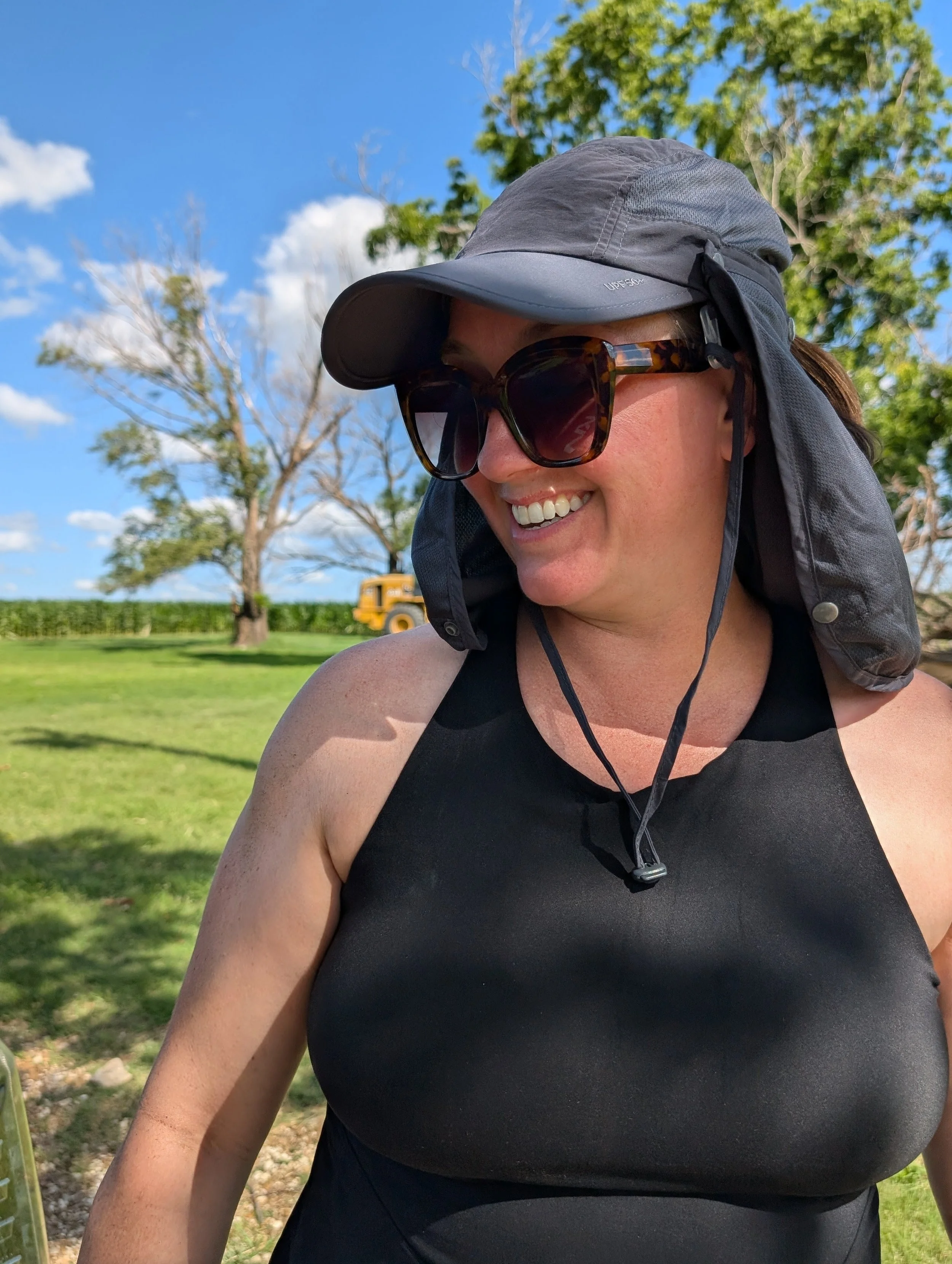
Me on the Farm #sunprotection Photo Credit: Duana Guinty