Hey there, and Welcome!
My name is Roxanne, or Roxy, or Rox - depending on when and where you met me. Likewise, depending on who I was when you met me - you may be surprised to find me here - talking about the intersection between farming and fashion. So, let me catch you up…
I am an industrial engineer by degree (Ohio State). I pursued this career not to become a titan of industry, but because I wanted to see the world. I credit my dad for the idea and he wasn’t wrong. Within a few years of earning my degree I was stationed on projects in Switzerland, Germany, China, the UK, Boston, Oakland - you get the idea. It was a dream role for my mid-twenties; when I had endless energy, few responsibilities, and no geographical ties.
After a handful of years, my partner and I found ourselves in the San Francisco Bay Area and decided to stay put. I knew I was really and truly done with the traveling role when I found myself in Zurich during the first snow, at 7 weeks pregnant. Here’s the thing about the first snow in Zurich - the Swiss do not make fondue until the first snow. So, when the first snowflakes drop, everyone makes fondue. The entire city smells like fondue. Which is potent, to say the least. It’s truly a special time to be in Switzerland - unless you’re already struggling with morning / evening / anytime sickness. It was too early to announce my pregnancy and too big of a tradition to decline a fondue dinner with colleagues, so I sat in the tent of Frau Gerold’s Garten, silently contemplating my life choices and trying to keep down my water.
After that fateful trip, I transferred to a role within one of the company’s manufacturing facilities that would keep me home more often than not. My new role was a bit ill-defined and under one of the best managers I’ve ever had. My directive was essentially to find problems and solve them - the rest was up to me. One of these identified problems directly resulted in me changing my entire career path. Don’t worry - being the fabulous guy that he is, my then manager just cheered me on.
So, what was this life changing problem? Plastic. In addition to other items, our facility produced medical grade plastic components (injection molded, if you’re curious). The nature of our products required us to use plastic - plastic may be over used in our society, but one place where it has done more good than harm is in medical research labs. Additionally, our contamination constraints did not allow us to use recycled materials. In short, when things didn’t go as planned, as is often the case in manufacturing environments, we could not reuse the plastic in house. We tapped into the downcycling supply chain and sent our used plastic to partners in other industries that did not have the same material specifications. At the time, most of these downcycling partners were in China. In 2017, when China announced they would no longer take plastic recycling from the US - we felt the hit. No specifics here, but we made A LOT of components. We used A LOT of virgin plastic. We had A LOT of plastic to recycle. The US recycling infrastructure was (and still is) lacking. In just a few short months, this material that we had been able to sell to another industry would become a cost burden. We now had to pay someone to take and use our perfectly usable materials. We brainstormed ways to use the material - could we get into the frisbee making business? At one point, there was a comment that it was actually cheaper to just send this totally usable material to landfill. These conversations sent me down the end of product life (EOL) rabbit hole that I’m kinda still in. I started exploring what actually happens to the items we throw in the trash, compost, or recycling. In my research I learned that most of the clothes we donate get shipped across the world where they disrupt local marketplaces and pollute far off shores. I was hooked.
It wasn’t the innate wastefulness of the fashion industry that drew my attention. I think that’s been part of the zeitgeist for most of this century. What had me spiraling is the lack of good advice on how to be a responsible consumer.
Is it better to buy a 100% cotton tee or a recycled polyester tee?
A cotton tee uses a natural, renewable resource, but farming cotton uses a lot of water and processing cotton uses a lot of energy. A recycled polyester tee uses less water and energy to produce than a virgin cotton tee, but will release microplastics during active product life.
At end of life, a cotton tee will decompose in your backyard, but a polyester tee will be around for a century. Both a 100% cotton tee and a 100% recycled polyester tee can be recycled - sort of.
A recycled cotton tee seems like a great solution, but the recycling process weakens the material fiber shortening the shirt’s active product life. So is a longer lasting recycled polyester shirt better than a recycled cotton shirt? - I suppose it depends on when and where you’ll wear the shirt.
Now, let’s add in if the cotton tee has a Better Cotton Initiative tag, but the polyester tee is bluesign certified?
What do these certificates even mean? (skip to the glossary)
We all wear clothes; we are legally required to. But how to partake responsibly? All these questions lit my brain up and I couldn’t stop. I started talking to people and realized there is a great deal of emotion on this topic. No one wants to wear a garment made in a sweat shop, but most people can’t afford Fair Trade Certified garments. Additionally most people don’t have the time or interest to research all these sustainability claims to allow them to compare apples to oranges.
I decided I had the time and the interest. I made my first connection in the industry via a friend of a friend. Over our first cup of coffee, she asked me to come to an interview at her company - they would find me a job. After 6.5 years in the industry I have answered many of my initial questions. However, each answer has led to more questions (isn’t that always the case!?). So that is why I’m here - to talk about what I’ve learned, what I’m currently learning, and what I still want to learn.
Hope you’ll stick with me!
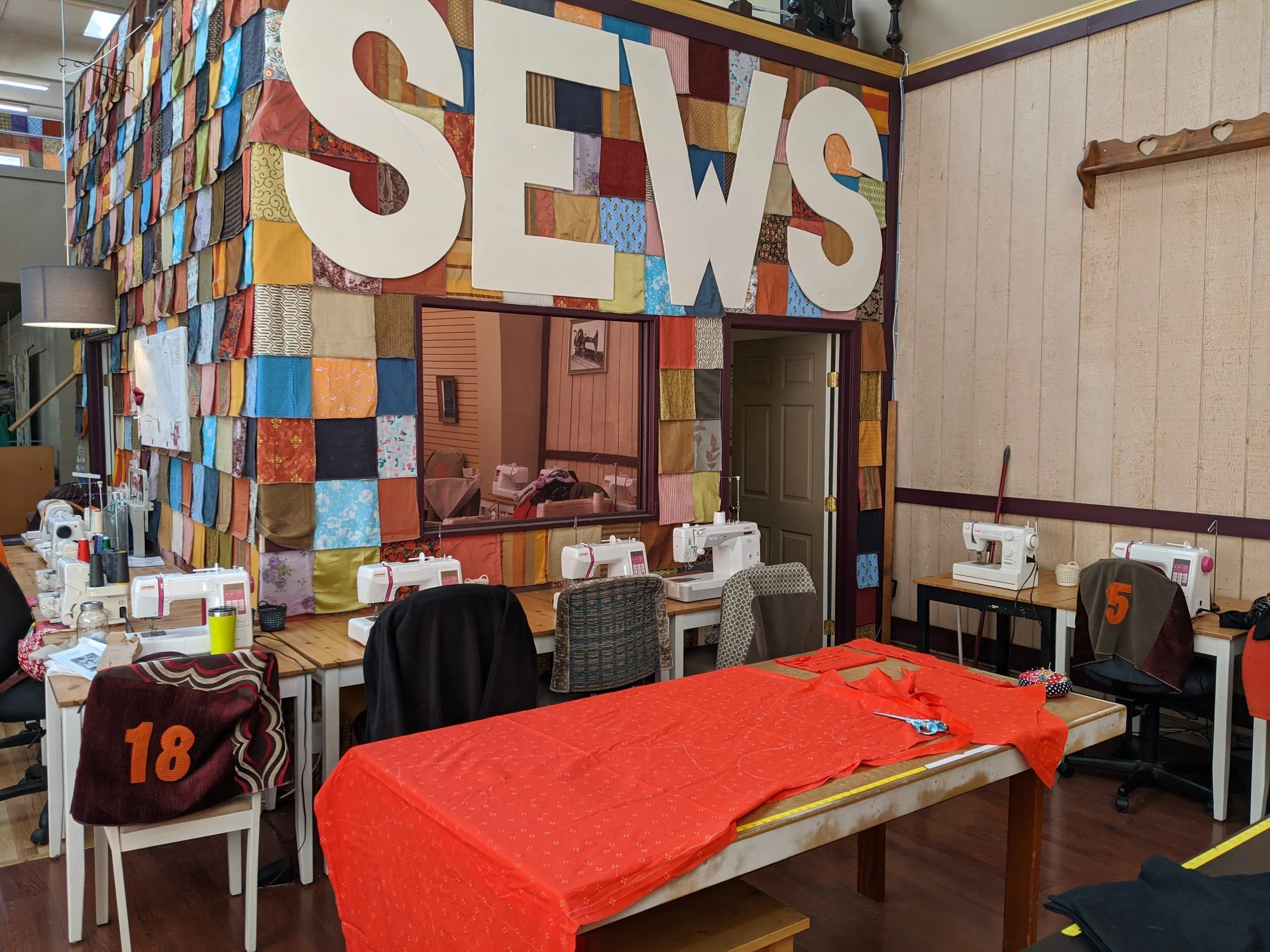
“I’ve always made things and been drawn to the idea of fashion. When we were small, my sister and I and our friends would put on fashion shows at every sleepover. At the age of 14, my sister and I combined our worldly savings ($40 each) to buy the cheap Brother sewing machine that I still use to this day.”