Janie’s Mill
February 26, 2025 | Ashkum, IL | Stone Ground Organic Grains
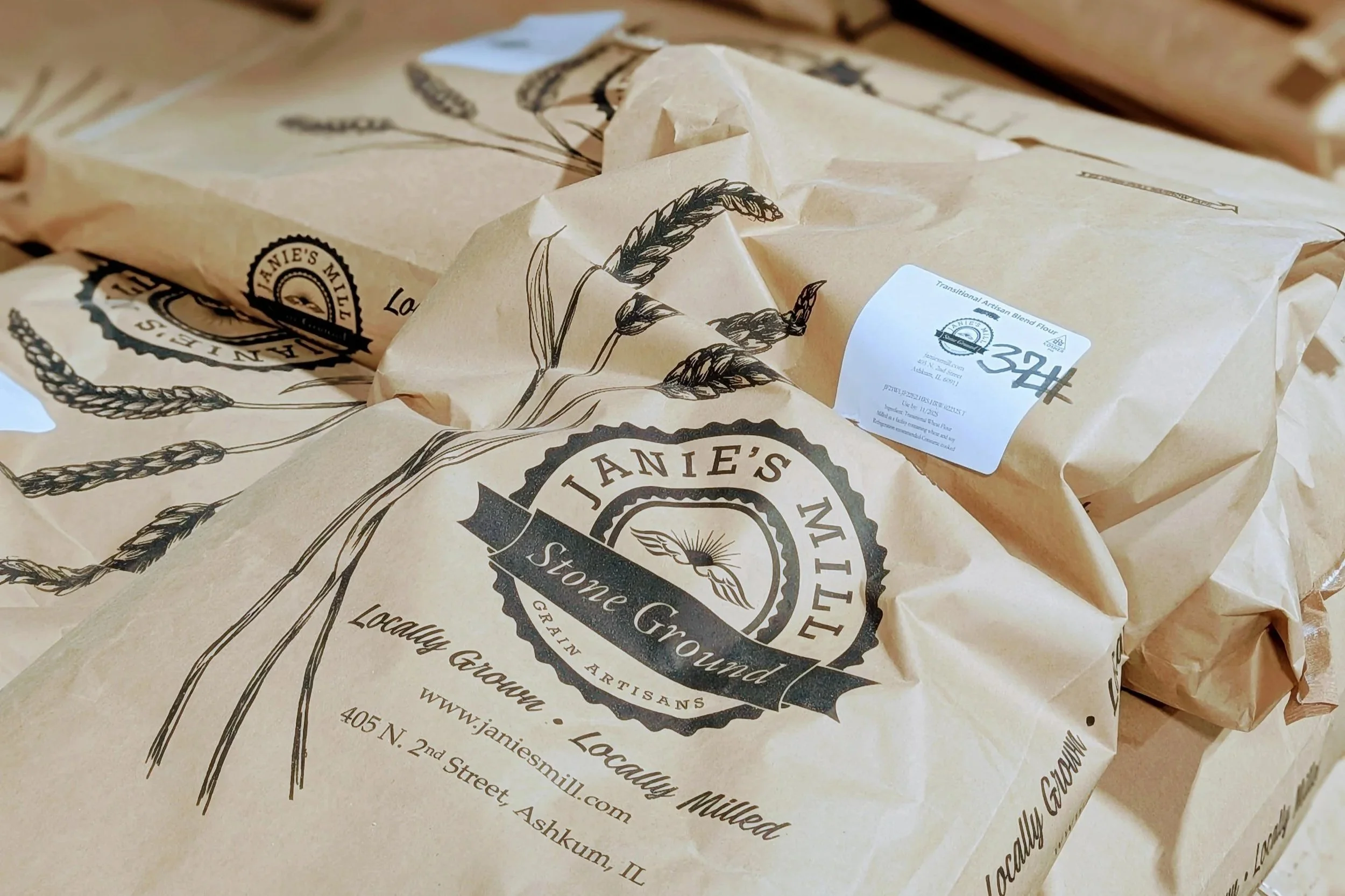
Janie’s Mill is the processing plant for the organic grains grown on Janie’s Farm. Of the 10 people on my tour, I was the only non-baker. Everyone else on the tour was looking to source fresh, local grain for their business or personal endeavours (one is looking to open a donut shop, one is starting a meal delivery business, and many are home bakers). I asked why they believe organic is important. Universally the said taste and nutrition. I asked what they are looking for in a grain supplier. These answers are more varied. In my words, it seems they are looking at Janie’s mill so they have full supply chain transparency. I also learned that many of these expert bakers will not source flour from their grain supplier. They want to buy the actual grain berries, which they will grind into flour themselves. Similar to coffee, this improves freshness and flavor - who knew?
My goal for the tour is a bit different. I simply want to observe the steps between taking wheat to the elevator and buying flour at the store. Janie’s Farm is a little different than the farm I visited in Kansas, because they do not take their grain to the elevator for payment. They take their grain from the field to a partner, who manages their silos. Their partner separates the grain into manageable portions and delivers the grains to Janie’s Mill for further processing.
At the mill, the grains are prepared for sale to the customer as raw berries, stone ground into flour, or heated and rolled into oats. The grains are portioned into sellable units (1.5lb, 3lb, 10lb, 25lb bags), labeled, and sent to distribution. There’s really very little processing, which I think is part of the nutritional promise of organic grains.
The tour ended in their retail space, where I picked up a recipe card for waffles and the required flour, cornmeal, and buckwheat.
The images below show the flow of grains through the mill.
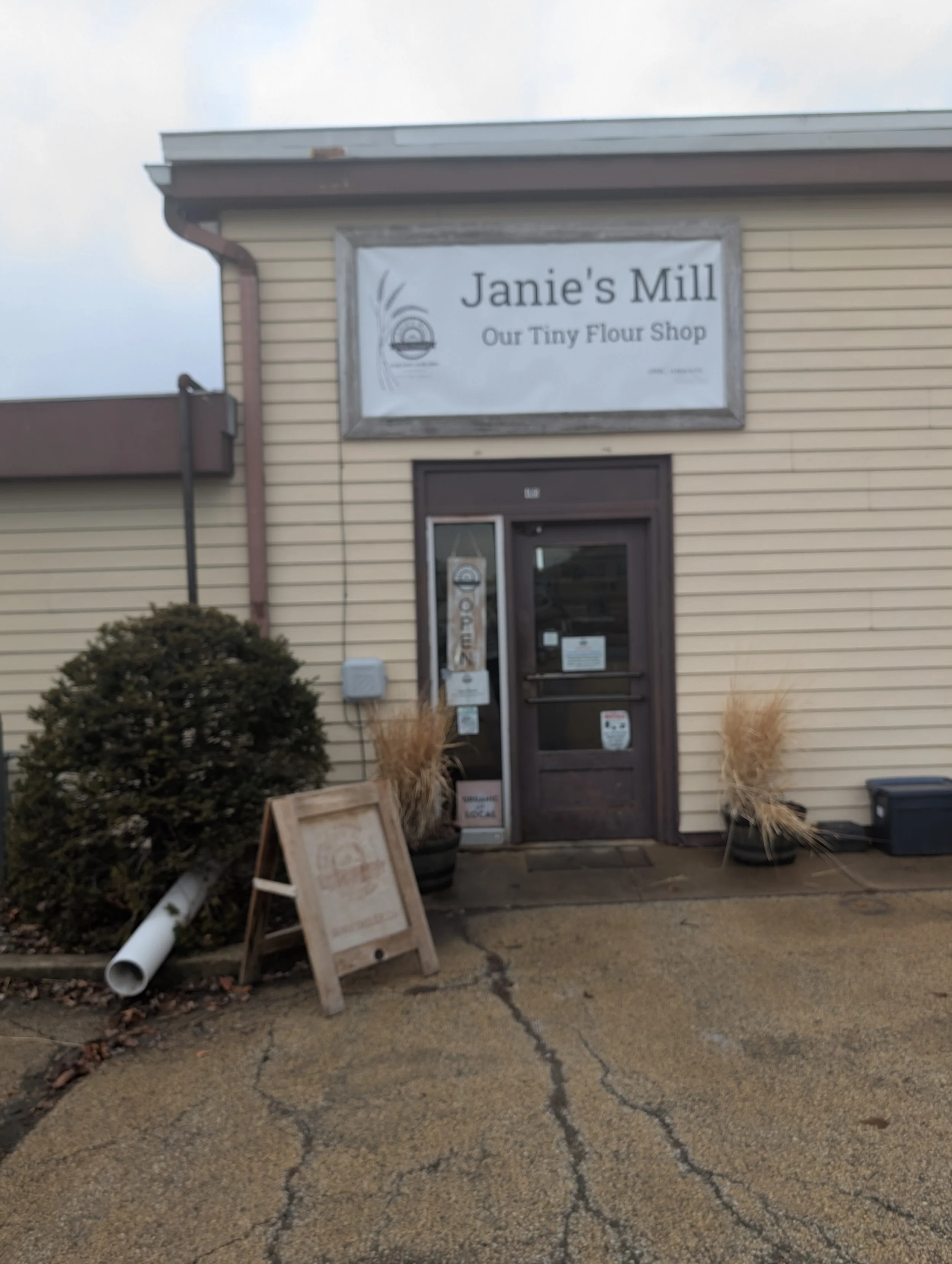
Welcome to Janie's Mill!
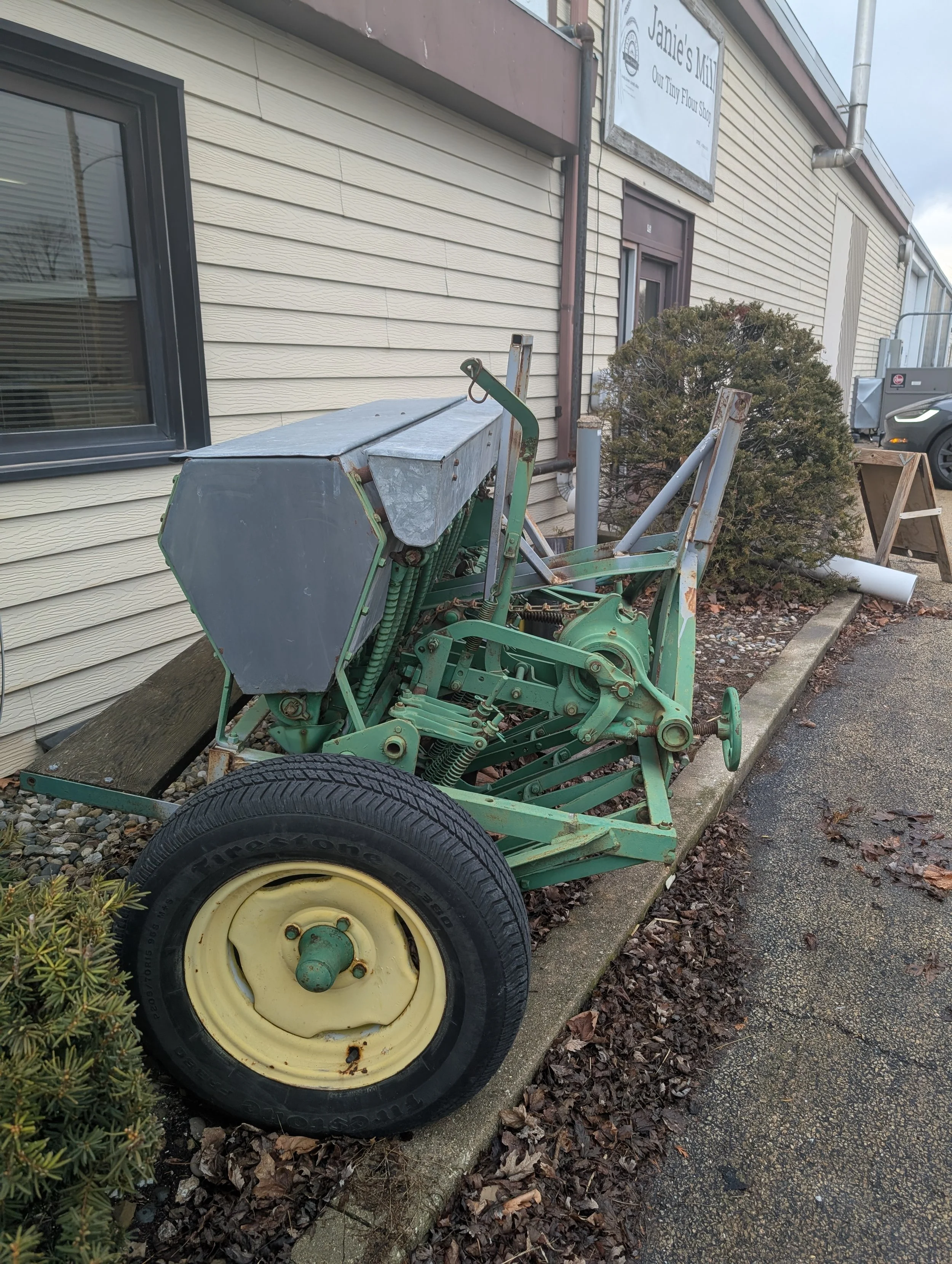
Vintage Grain Drill - used to plant seeds

I spent the first 8 years of my career at Mettler Toledo. I love seeing their scales in the wild.
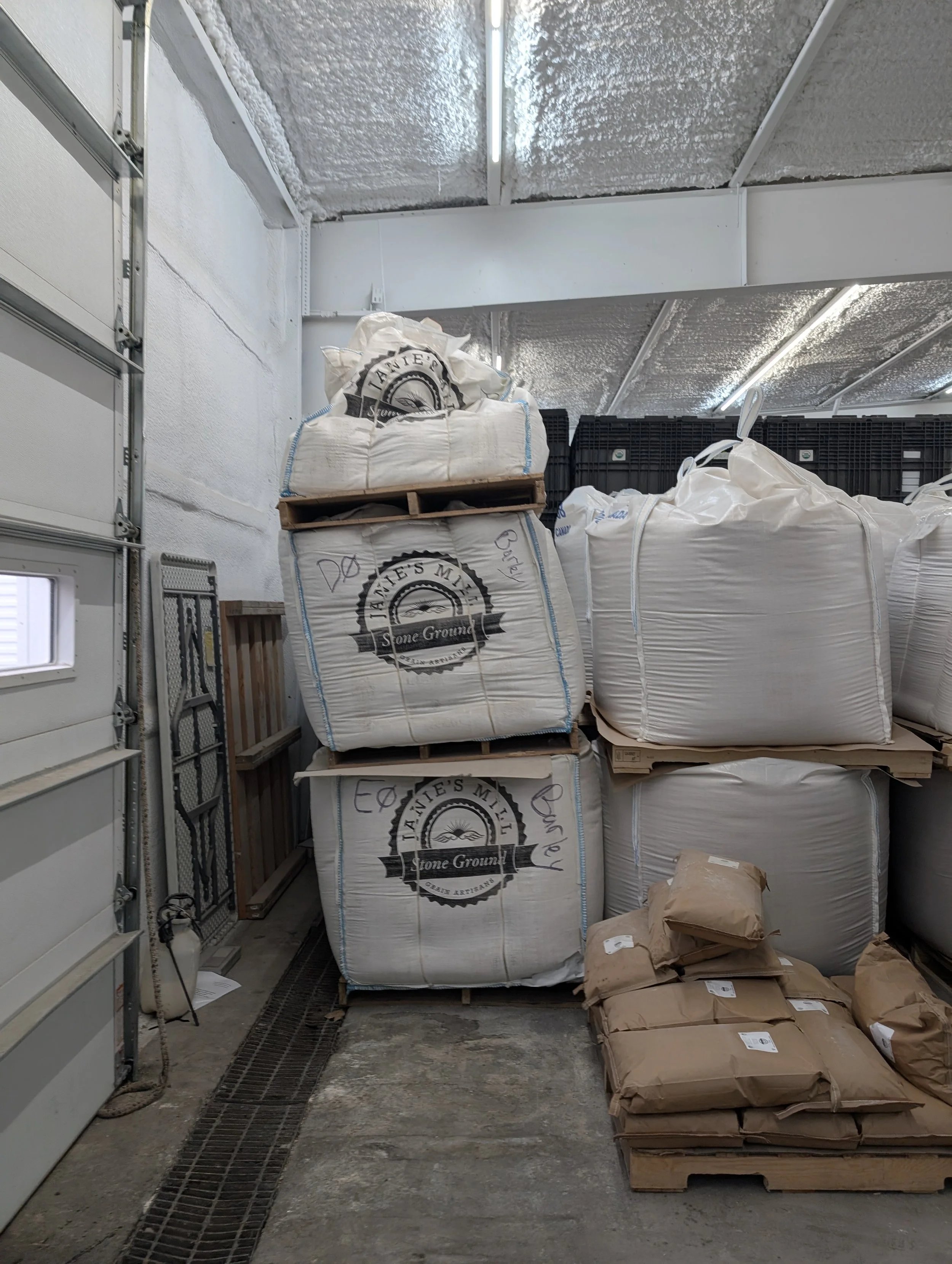
Grain is taken from the field to a partner facility, that preportions the grain into manageable batches, which are transported to the mill.
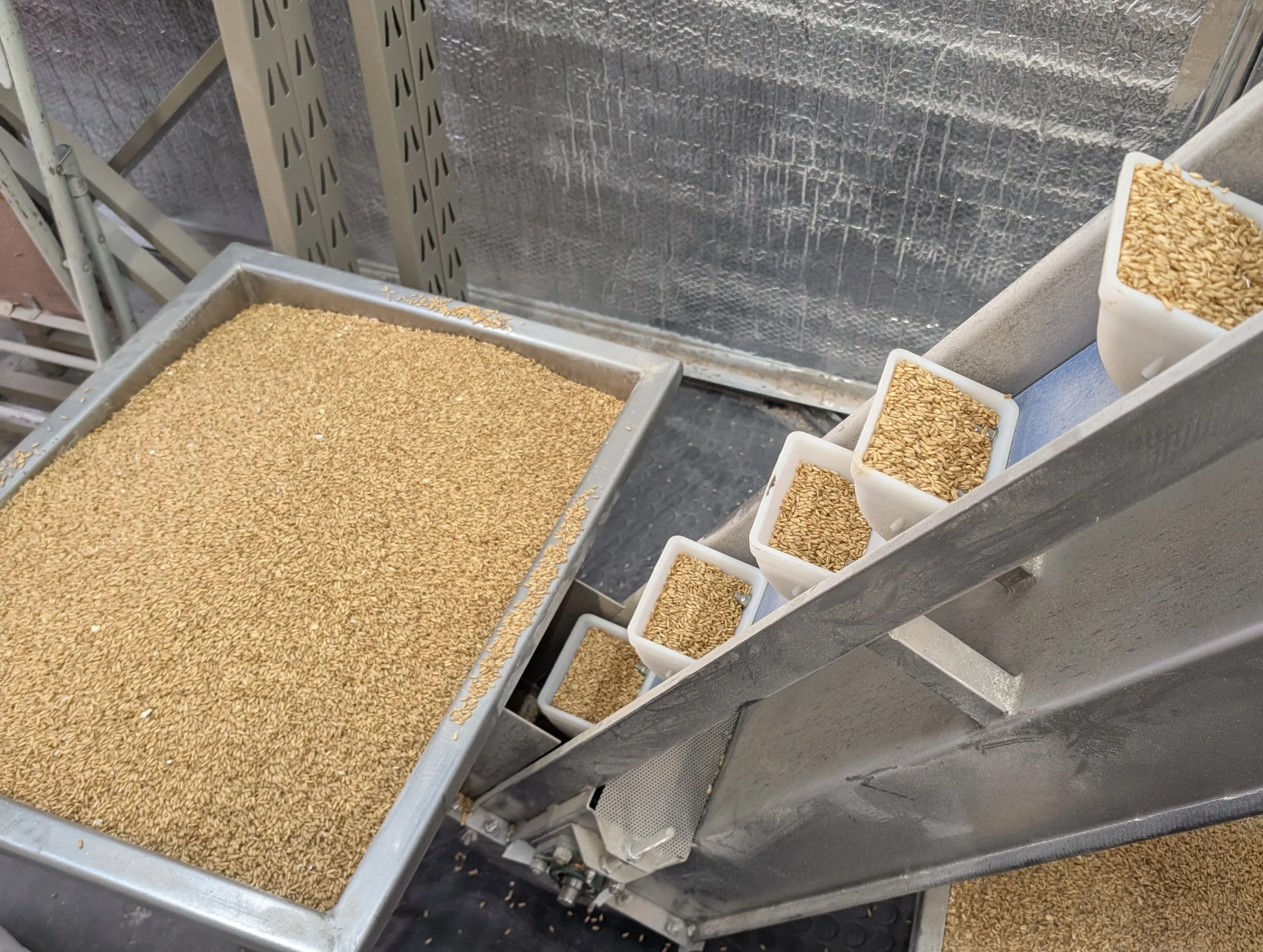
Wheat Berries
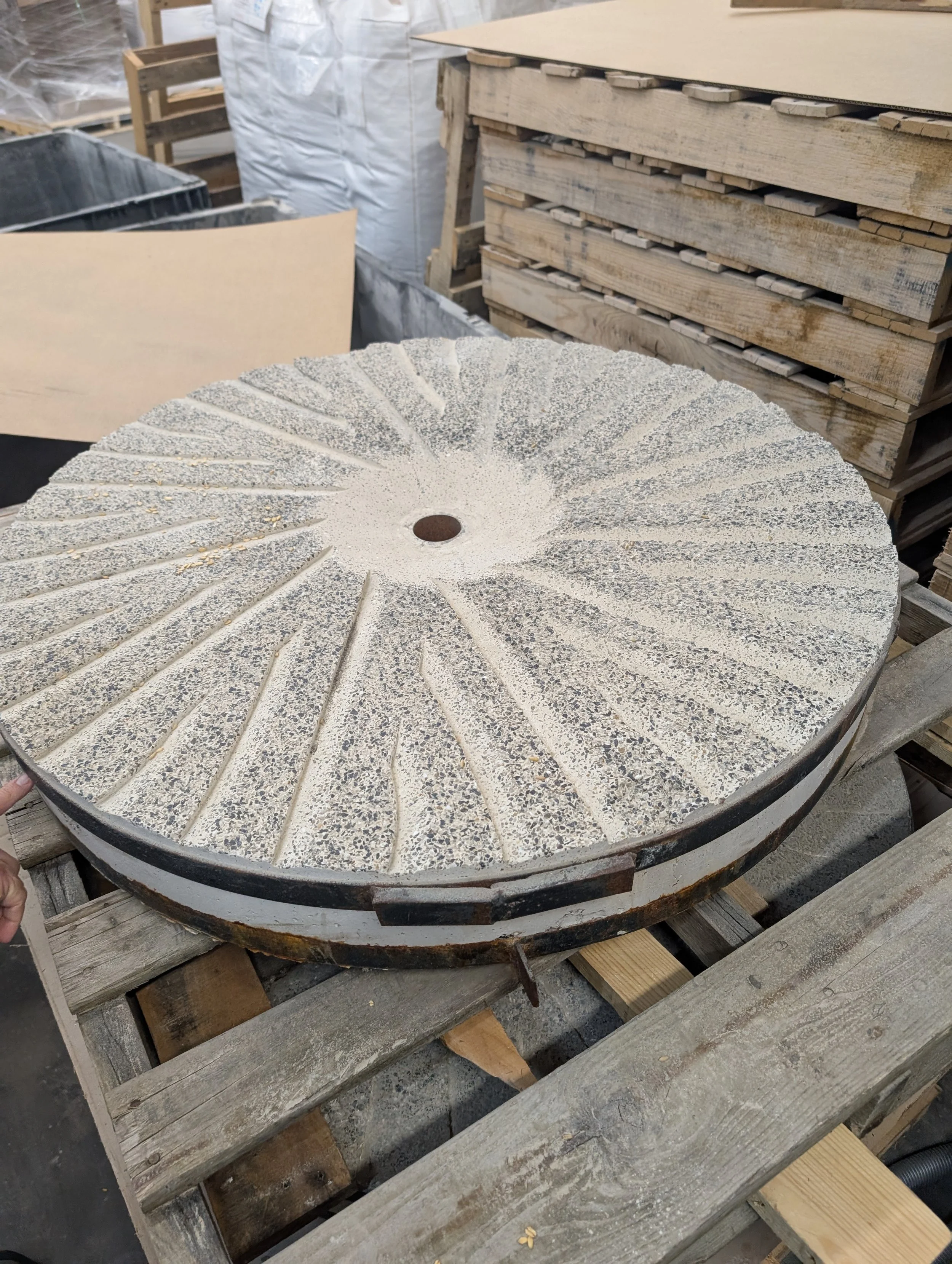
Flour is ground between two 500lb stones. The top one is stationary, the bottom one rotates. The distance between the stones determines how fine the grain will be. The millers listen to the grinding, to ensure the stones are set right. They can hear if the grains start to burn.
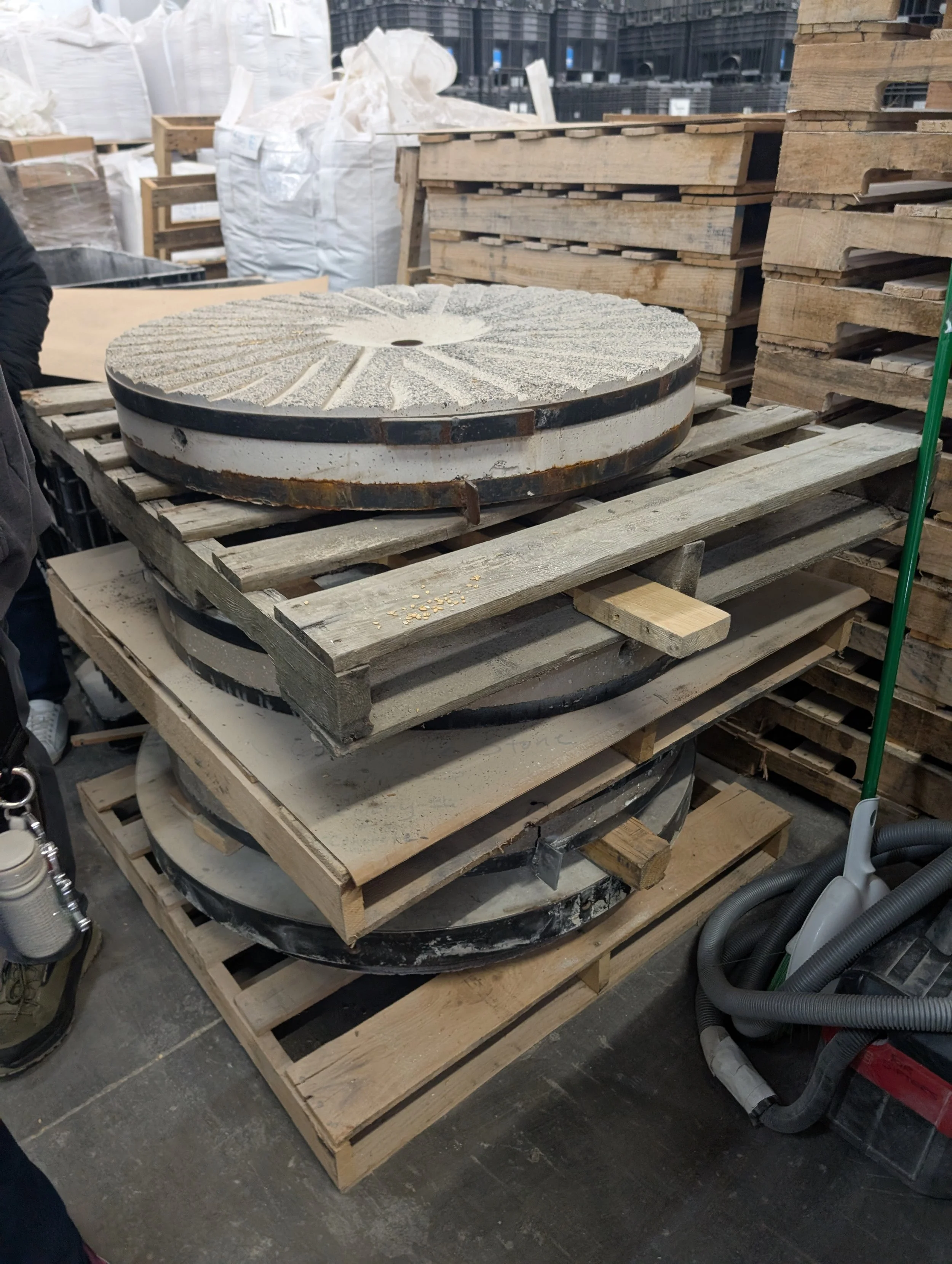
Once a stone is cracked, it cannot be repaired.
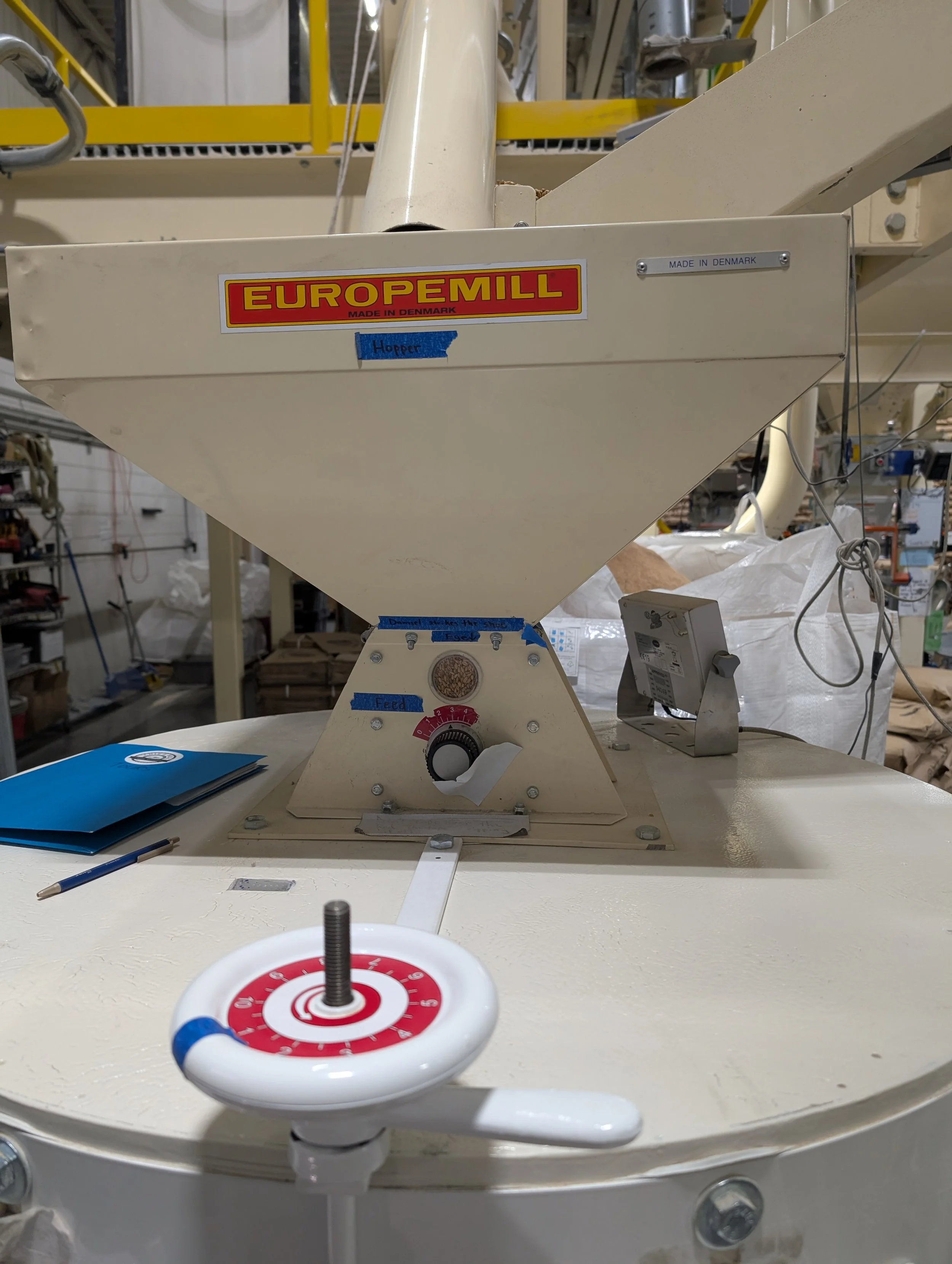
This is a terrible picture, but its the only one I got of this machine. This is the machine that encloses the two grinding stones, where the milling happens. The millers feed berries into the hopper at the top and the seperated flour, bran, and germ are vacuum transported to the next operation.
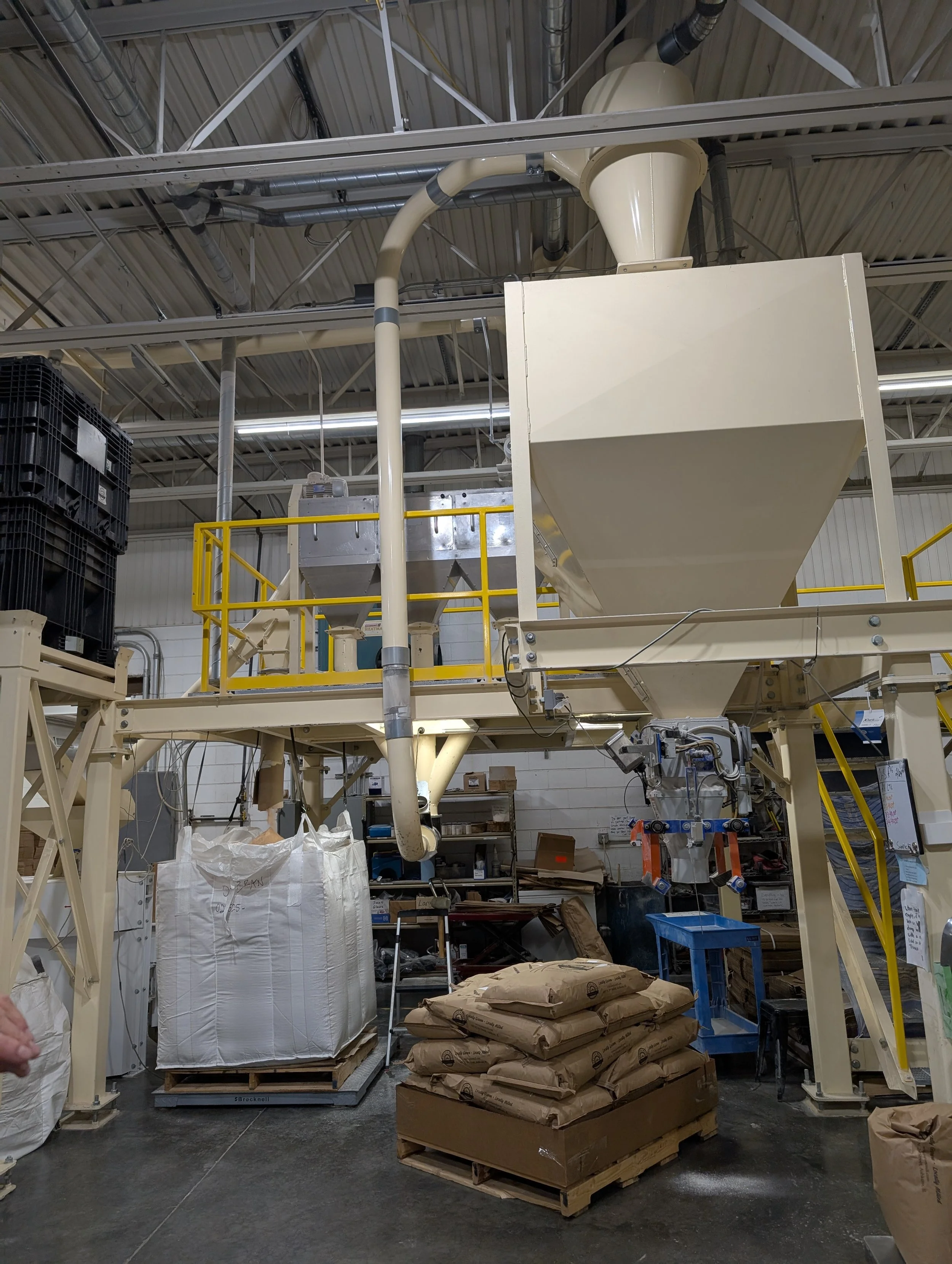
The next step in the process is extraction. This is where the bran and germ are sifted out of the flour. The volume extracted depends on the baker's needs. Whole wheat is more nutritious, but its granularity makes it more difficult to work with. Fine white flour is easier to work with, but is less nutritious, as most of the bran and germ have been removed.
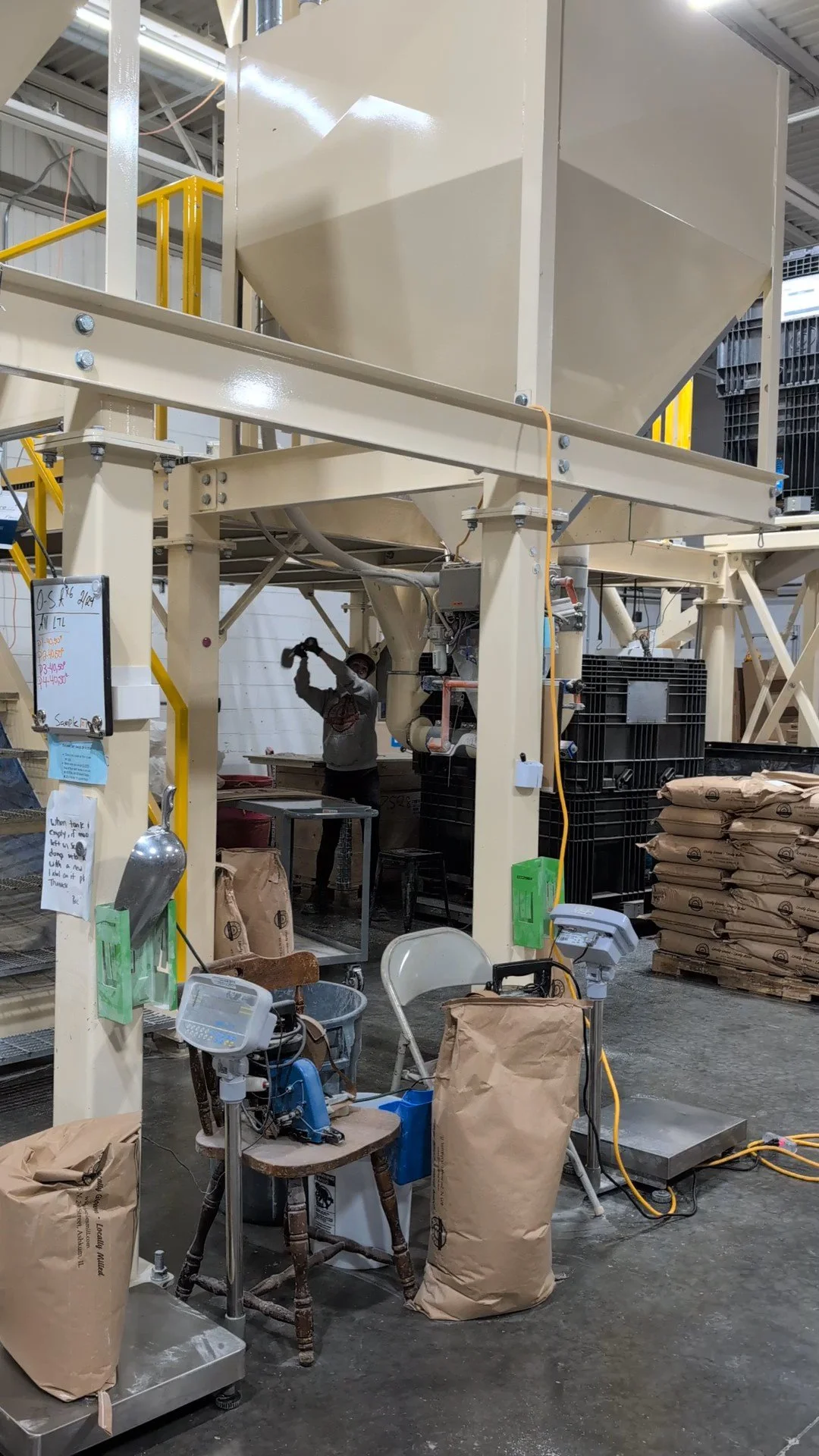
unclogging the extraction machine
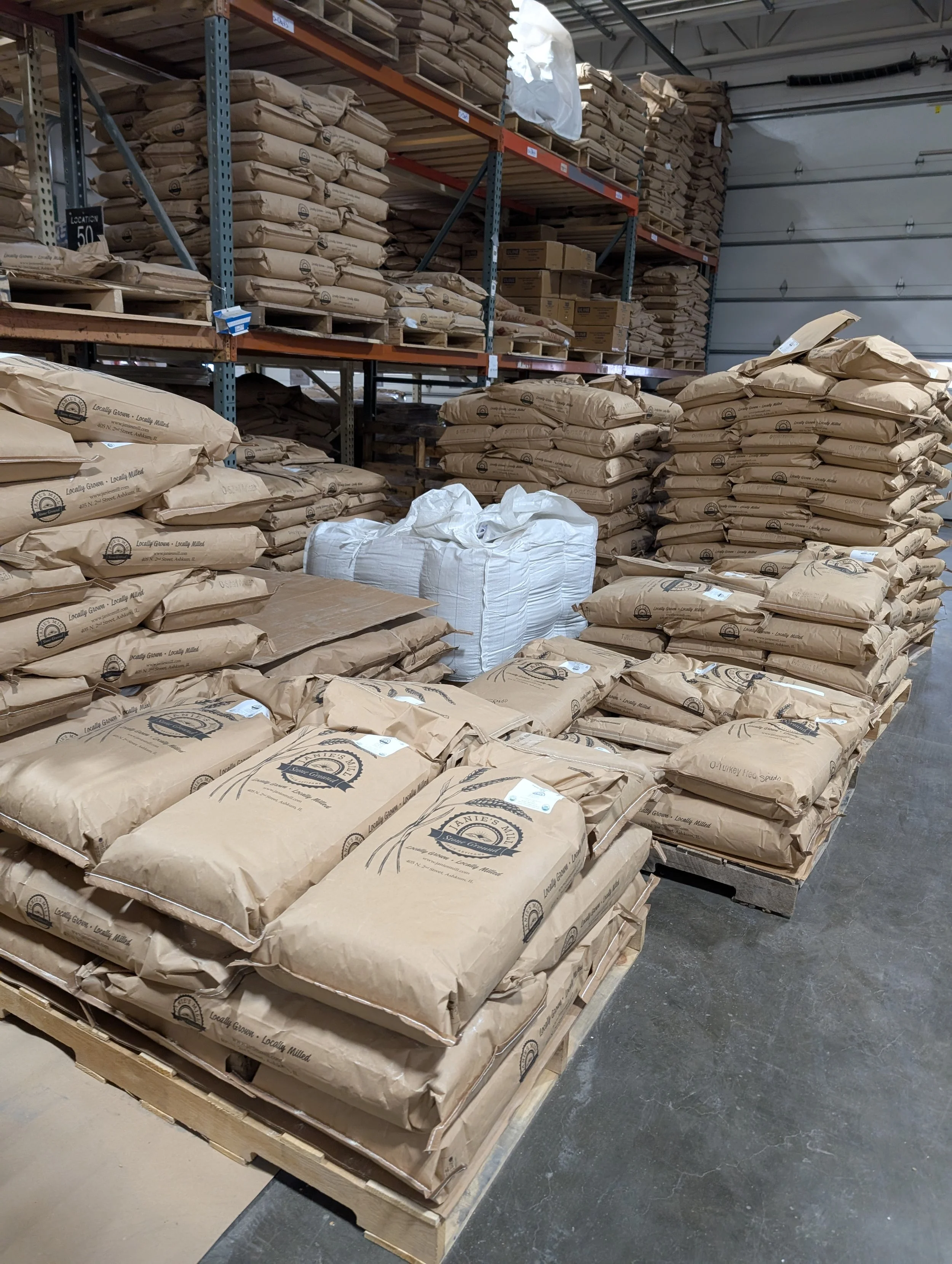
White flour is typically 70-80% extraction, which means enough bran and germ have been sifted out, that only about 70-80% of the original kernel weight remains. Conversely, 100% whole wheat is 0% extraction, which means no bran or germ have been removed.
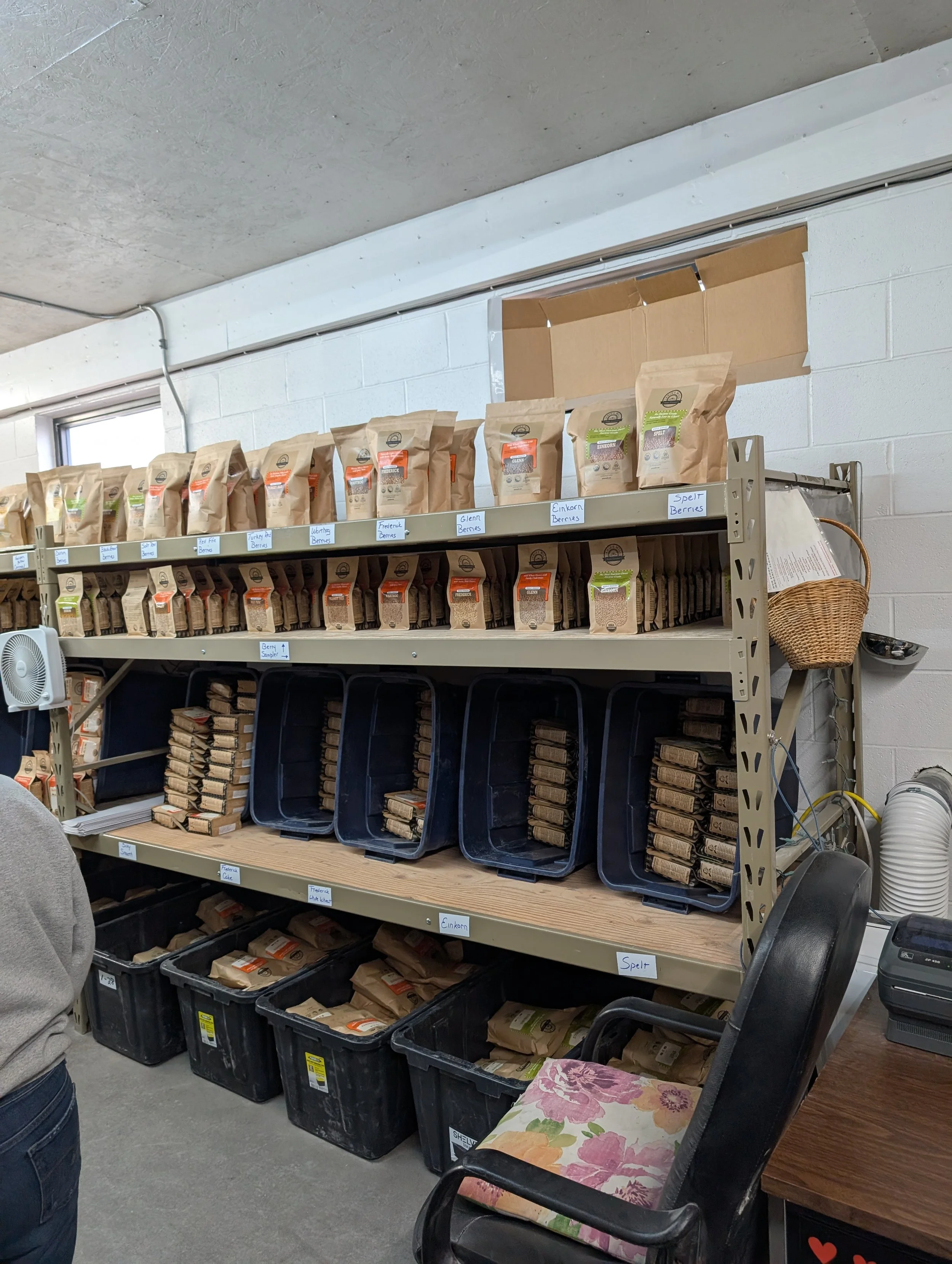
Janie's Mill sells volumes of 1.5lb, 3lb, 10lb, and 25lb. Most of their customers are small, home bakers. They credit everyone making bread during the pandemic for putting them on the map. They ship product to all 50 states and territories.